
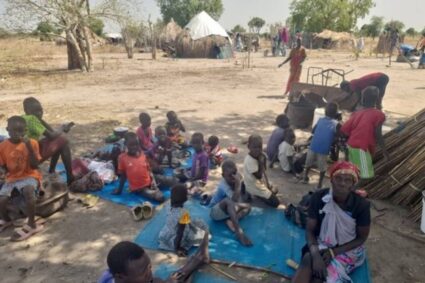

South Sudan in dire humanitarian need, says UN official

Under-Secretary-General for Humanitarian Affairs and Emergency Relief Coordinator Mark Lowcock has said South Sudan requires ‘swift’ humanitarian assistance to avert the brewing crisis in various states.
Lowcock said in a virtual briefing—which included officials from the states and had the contribution of the United Nations— that a lot had been done but still more efforts are necessary to help those in need. The meeting was aimed at discussing the remedial actions to ensure the victims can get self-sustaining initiatives to alleviate suffering.
The virtual taskforce meeting was attended by the Minister of Humanitarian Affairs and Disaster Management Peter Mayen Majongdit, and Sibylle Katharina Sorg, Director-General for Crisis Prevention, Stabilization, Post-Conflict Peacebuilding and Humanitarian Assistance at the German Federal Foreign Office.
The others were Head of the Titi Foundation Gloria Ndong Morris, Qu Dongyu, the Director-General of the FAO, and Alain Noudehou, who is the Humanitarian Coordinator in South Sudan.
Mr Lowcock acknowledged that the country was in a desperate humanitarian situation leading to the loss of at least six lives in 10.
‘‘South Sudan faces the highest hunger levels in its ten-year history as a nation,’’ he said, before adding: ‘‘Conflict and climate shocks have left six people in ten [states] food insecure. More than 100,000 are either one step away from, or already in, famine conditions. And with thousands displaced at this critical start to the planting season, many more people are on the brink.’’
Livelihood disrupted
The undersecretary blamed two-year conflict, COVID-19 pandemic and the floods as the main disruptors of livelihood. This, he said, had aggravated the humanitarian needs albeit well-wishers and humanitarian workers have done their best to mitigate the situation.
He said, ‘‘Humanitarian workers have scaled up the response in all sectors, and have overcome obstacles including violence, looting and bureaucratic impediments on the ground. In recent weeks there have been multiple attacks on aid workers and assets. Despite this aid workers continue to reduce suffering and save lives. All parties must assure the safety of aid workers.’’
He added that humanitarian organizations needed US$1.7 billion to provide life-saving help to 6.6 million people and thanked charitable donors even as he insisted that more funds are required to bridge the over 80 per cent funding gap.
‘‘We have no time to lose. The rainy season is coming, and we need to pre-position food and other supplies now to avert famine. The earlier we act, the further that money goes, and the more lives we can save,’’ he stated.
This comes barely a week after World Food Programme (WFP) announced a food rationing move citing cash crunch that had affected the programme. The aid agency said at the time that the programme required an extra US$125 million to run smoothly.