


Country thrown into mourning following death of towering statesman, liberation hero, veteran politician and military commander who walked the thorny paths of South Sudan’s journey
By City Review Editorial
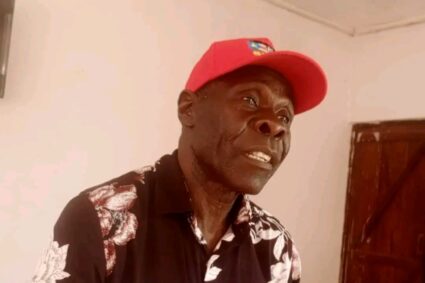
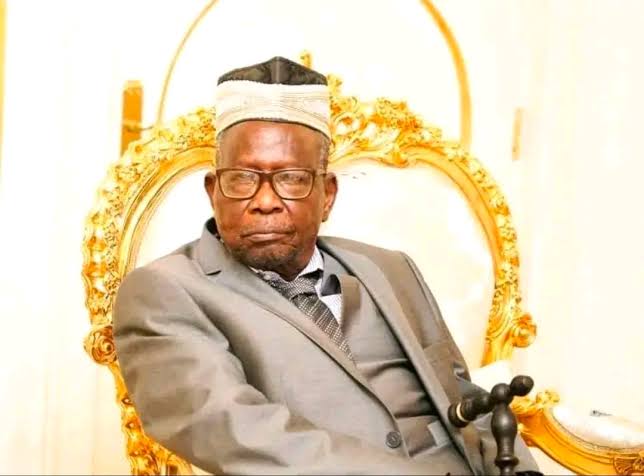
The late Hon. Joseph Lagu Yanga, was leader of the Anyanya Movement, which fought the Sudanese Central government during the First Sudanese Civil War from 1963 to 1972. [Photo: Courtesy]
South Sudan has lost one of its most influential liberation figures, retired General Joseph Lagu Yanga, the former Anyanya rebel commander who helped negotiate the 1972 Addis Ababa Peace Agreement and later served as Sudan’s vice-president and ambassador to the United Nations.
Lagu died in Juba on Tuesday at the age of 94. Following his demise, President Salva Kiir Mayardit declared national mourning to honour the veteran politician, liberation hero, diplomat and statesman, who played an active role in drafting some of the most iconic and memorable chapters of South Sudan’s history.
In a statement obtained by The City Review, Kiir described Lagu as a “nationalist and liberation hero” who dedicated his life to the struggle for freedom in South Sudan.
The president ordered national flags across the country and at South Sudanese diplomatic missions abroad to fly at half-mast until Lagu’s burial.
Kiir, who was in Russia attending the third Russia-Africa summit, said he would personally bid farewell to the late general at a state funeral. He also urged South Sudanese to mourn Lagu’s death while celebrating his life and legacy.
The president called on citizens to pray for the bereaved family, noting that Lagu had lived to witness the birth of the country for which he fought.
Born on November 21, 1931, in Momokwe in the Madi area of present-day Eastern Equatoria State, Lagu trained as a military officer before defecting from the Sudanese army in 1963 to join the southern rebellion.
In 1968, he became leader of the Southern Sudan Liberation Movement and commander-in-chief of its armed wing, Anyanya, which fought for southern Sudan’s political rights and autonomy during the first north-south civil war.
His leadership helped pave the way for the Addis Ababa Agreement, signed in 1972 between the southern movement and the government of President Gaafar Nimeiry. The agreement ended a conflict that had begun in 1955 and granted southern Sudan a decade of regional self-government.
Following the agreement, Lagu returned to the Sudanese army and rose to the rank of lieutenant-general. He later served as president of the High Executive Council of the autonomous Southern Region from 1978 to 1979 and as Sudan’s second vice-president from 1982 to 1985.
However, the agreement was abrogated in 1983, contributing to renewed conflict in southern Sudan.
After Nimeiry’s overthrow in 1985, Lagu settled in Britain before returning to public service as Sudan’s roving ambassador and later permanent representative to the United Nations from 1990 to 1992.
Following South Sudan’s independence in 2011, he served as a special adviser to President Salva Kiir before retiring from active public service.
In 2022, his family launched the Joseph Lagu Foundation to support education, leadership development, community empowerment and humanitarian assistance.
Lagu also completed his memoir, Sudan Odyssey: Through a State from Ruin to Hope, in 2006, documenting a career that spanned armed struggle, peace negotiations, government service and diplomacy.
His death marks the passing of a generation of leaders who shaped southern Sudan’s struggle for autonomy and the long road to independence.