

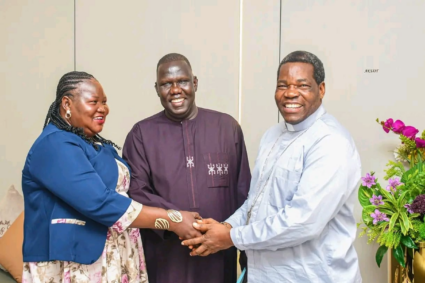
South Sudan risks losing international support, says IGAD

The diplomat warned that the continued delays could further diminish the country’s international support, making it even more challenging to achieve sustainable peace
By Aguok Chok
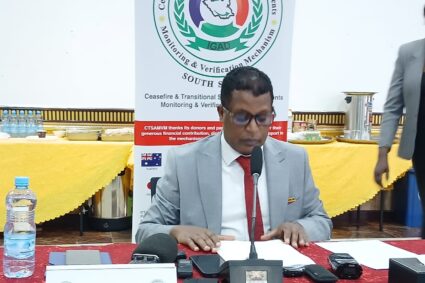
The Inter-Governmental Authority on Development (IGAD) Special Envoy to South Sudan, Dr. Ismail Wais said South Sudan is at risk of losing international support as the world is shifting focus to the international wars.
“The government must put a stop to the rampant mismanagement of funds,” he asserted, highlighting the importance of financial discipline in ensuring the success of the peace agreement.”
“As regional and international dynamics shift, with conflicts in Ukraine, Sudan, and Palestine diverting attention and funding away from South Sudan,” Dr. Wais stated.
He urged the leaders to recognize the reality that “South Sudan is no longer a priority” for many partners.
The diplomat warned that the continued delays could further diminish the country’s international support, making it even more challenging to achieve sustainable peace.
“The time to act is now, South Sudanese leaders should demonstrate a sense of unity, vision, and urgency business cannot continue as usual,” Dr. Wais warned.
He added it has been over six years since the signing of the Revitalized Agreement on the Resolution of the Conflict in the Republic of South Sudan, “Initially agreement planned for a 44-month implementation period.”
“It has faced multiple delays and extensions. Originally planned to be implemented within an overall period of 44 months… it will now take a total of 101 months and 10 days until February 2027,” said Wais while addressing delegates at the governors’ forum yesterday.
Dr. Wais said the extension of the pre-transitional period, which was supposed to last only eight months was stretched to 17 months.
The envoy described a direct result of the failure to implement critical tasks, such as the unification of forces and the resolution of state boundaries.
However, he noted the compromises made by South Sudanese leaders which he said had managed to keep the peace process on track, including President Kiir’s decision to revert to the 10 states.
Despite these efforts, Wais emphasized the lack of progress in some areas, particularly the unification of forces and the lack of funding for key institutions.
On a positive note, the envoy acknowledged the steps taken such as the formation of transitional institutions and the progress in legal reforms.
“The formation of all pre-transitional institutions and mechanisms and the work done by these entities so far should also be recognized and appreciated,” Dr. Wais said, highlighting the commitment of all parties involved.
However, he cautioned that the pace of progress has not met expectations and urged the government to inject a sense of urgency and take immediate and unconditional disbursement of funds to avoid further delays.
Also, Dr. Wais pointed out the critical role of transparency and accountability in the management of resources, stressing the need for control mechanisms to prevent the mismanagement of funds, which has been a major obstacle to the success of the peace process.
“It has faced multiple delays and extensions. Originally planned to be implemented within an overall period of 44 months… it will now take a total of 101 months and 10 days until February 2027,” said Wais while addressing delegates at the governors’ forum yesterday.