



An empowerment organisation has expressed concerns that fears are amounting amongst the South Sudanese refugees currently living in Uganda as a result of the Thursday election.
Community Empowerment for Progress Organization (CEPO) revealed in a press statement that the refugees have developed fear as a result of the anxiety that surrounds the election, which has been marred by violent protests in the campaigns.
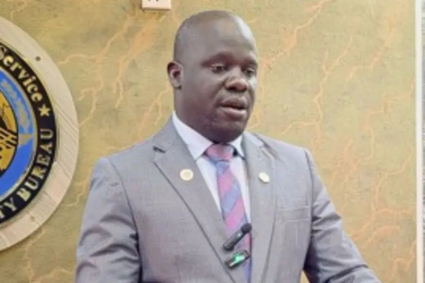
CEPO Executive Director Edmund Yatani has called on the Ugandan authorities to treat refugees as non-partisan group in the Thursday poll to avert tension in the camps.
‘‘The refugee population in Uganda are in panic with the assumption that maybe the elections process will turn into violent elections,’’ Yatani said.
He proceeded to say: ‘‘Refugee’s camps should be treated as non-partisan entities by all Uganda political actors being the government, political parties and citizens. All human rights values for people during electoral process situation should be applied to the refugees in Uganda from various neighbouring countries.’’
Apart from urging the UNCHR to educate the refugees on how to handle the election by remaining non-partisan as required of them by the law; Yatani urged Ugandans to embrace non-violent election for the sake of maintaining peace and tranquillity.
According to CEPO, Uganda hosts 1.4 million refugees from South Sudan and the Democratic Republic of Congo. The refugees are spread in 11 settlement camps.
Tensions
NRM’s incumbent President Yoweri Museveni is seeking to extend his term after rising to the summit of power in 1986. Museveni faces challenge from 10 other contestants, one of them being Kyadondo East Member of Parliament Robert Kyagulanyi alias Bobi Wine who vies on National Unity Party (NUP). The campaigns have been characterised with chaos, brutalisation and deaths.
For instance, Bobi Wine’s supporters have been targets of the state security machinery that has insisted on enforcing COVID-19 protocols to avert the spread of the virus. The Ugandan police have religiously enforced social distancing rules, often dispersing or blocking opposition supporters from accessing the venues. This has always led to chaotic protests as supporters of opposition candidates blame the officers of selective enforcement of the rules and bias.
CEPO Executive Director Edmund Yatani has called on the Ugandan authorities to treat refugees as non-partisan group in the Thursday poll to avert tension in the camps.
‘‘The refugee population in Uganda are in panic with the assumption that maybe the elections process will turn into violent elections,’’ Yatani said.
He proceeded to say: ‘‘Refugee’s camps should be treated as non-partisan entities by all Uganda political actors being the government, political parties and citizens. All human rights values for people during electoral process situation should be applied to the refugees in Uganda from various neighbouring countries.’’
Apart from urging the UNCHR to educate the refugees on how to handle the election by remaining non-partisan as required of them by the law; Yatani urged Ugandans to embrace non-violent election for the sake of maintaining peace and tranquillity.
According to CEPO, Uganda hosts 1.4 million refugees from South Sudan and the Democratic Republic of Congo. The refugees are spread in 11 settlement camps.
Tensions
NRM’s incumbent President Yoweri Museveni is seeking to extend his term after rising to the summit of power in 1986. Museveni faces challenge from 10 other contestants, one of them being Kyadondo East Member of Parliament Robert Kyagulanyi alias Bobi Wine who vies on National Unity Party (NUP). The campaigns have been characterised with chaos, brutalisation and deaths.
For instance, Bobi Wine’s supporters have been targets of the state security machinery that has insisted on enforcing COVID-19 protocols to avert the spread of the virus. The Ugandan police have religiously enforced social distancing rules, often dispersing or blocking opposition supporters from accessing the venues. This has always led to chaotic protests as supporters of opposition candidates blame the officers of selective enforcement of the rules and bias.