






By James Chatim
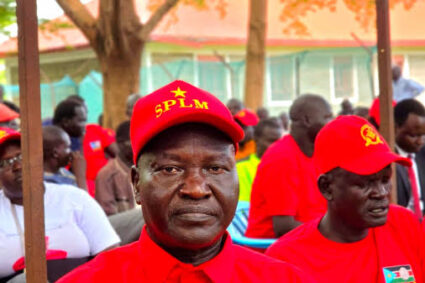
The Press Secretary in the Office of the First Vice President, Puok Both Baluang, has confirm the release of some members of the Sudan People’s Liberation Movement/Army (SPLM/A-IO) arrested last week after clashes between the White Army and the South Sudan People’s Defence Forces (SSPDF) in Nasir County, Upper Nile State.
Speaking to The City Review yesterday (on Tuesday), Baluang said eight members of SPLM/A-IO who were arrested were released.
“It is confirmed that eight individuals out of the group that were arrested have been released. There is no any agreement because there were not any reasons given to us at the time for their arrested. The same way the National Security just decided to release them,” he added.
He further called on the release of the other detained leaders.
Edmund Yakani, the Executive Director of Community Empowerment for Progress Organization (CEPO), welcomed the release of the SPLM/A-IO officials, saying that it is a positive step towards the de-escalation of the recent growing political tensions between the SPLM-IO and the government
Yakani said the culture of abstaining from taking serious political responsibility for implementing the R-ARCSS is worse and will likely contribute highly to the collapse of the Revitalized Agreement on Resolution of Conflict in South Sudan (R-ARCSS).
The CEPO Executive Director urged the presidency to hold urgent meetings for repairing damages on R-ARCSS following Nasir Violence.
“CEPO welcomes the release of the SPLA-IO. These are positive steps towards the de-escalation of the recent growing political tensions between the SPLM-IO and the government (SPLM-IG),” he said.
“It is essential to embrace the application of the rule of law and respect for human rights in the situation of political tensions among the parties to the 2018 peace agreement. The leadership of the parties to the peace agreement should refrain from resolving their political differences in a violent manner. What was witnessed recently following the Nasir Violence and change of leadership in Western Equatoria State is a bad and clear demonstration of political immaturity and indiscipline.”
“The culture of abstaining from taking serious political responsibility for implementing the R-ARCSS is worse and likely will contribute highly to the collapse of R-ARCSS. R-ARCSS, per now, is at risk stage between succeeding or collapsing. The presidency instrument is required to be proactive in mitigating any merger political misunderstanding among the peace partners on aspects of the implementation of the R-ARCSS,” he added.