
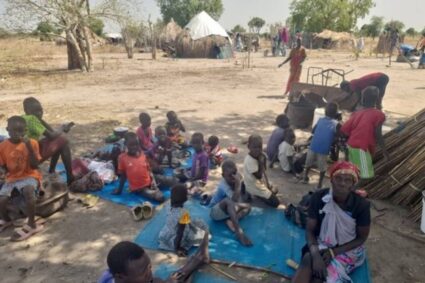

State urged to use 2018 peace deal to shield citizens from conflicts

The South Sudan Civil Society Forum (SSCSF) has urged the Revitalised Transitional Government of National Unity (RTGoNU) to use the recommendations in the 2018 peace deal to root out violent conflicts in the country.
In its detailed letter to the citizens, dated March 1, the SSCSF said the government is relying on the boardroom solutions to fight civil wars at the expense of dealing with those fanning conflicts in the states.
The letter partly reads: ‘‘instead of using the provisions contained in the agreement to address major security issues affecting the country, RTGoNU relies on ad-hoc interventions of holding political, elite-level and Juba-based dialogues.
‘‘While doing so, conflicting groups in the communities and villages continue with the menace.’’
The civil society group said the dialogue approaches pursued by the government has proven toothless because they culminate in ‘ceremonies whose outcomes are never seriously implemented.’
It added that despite several intelligence reports linking key figures to deadly ethnic violence in the country, no apprehension or prosecution has been forthcoming. And those who propagate the vice have continued the act with impunity.
“The United Nations has found evidence that senior army and elite politicians are providing weapons to communities,’’ the group said, adding that the country was yet to witness any action by the RTGoNU to hold to account individuals or groups responsible for the flow of combat grade weapons to civilians involved in killings, cattle theft, abductions of women and children and destruction of villages.’
The SSCSF said the situation was so alarming that armed civilians roam the villages with their weapons unperturbed. And that no local administration officers have been able to stop them despite endangering the peace in the states. Another instance is where the group faults the government for poorly managing disarmament in Warrap State leading to escalation of violence.
‘‘In some parts of the country, for example, Tonj East County of Warrap State, selective and poorly planned disarmament of civilians resulted in more violence and loss of lives; leaving heavily armed civilians in control of villages,’’ SSCSF stated.
Intervention measures
The statement comes after the violence which broke out in parts of Jonglei State and Pibor Administrative Area that forced President Salva Kiir to shelve other duties address a peace conference to secure the two areas in January 2021.
While addressing the ‘people-to-people’ conference on January 27 at Freedom Hall in Juba, Kiir made it clear that he had had enough of intermittent conflicts even as he persuaded the people to embrace peace.
“Next time you go for fighting I will not come to help you again, and even I will not appoint any committee to go and investigate the fight in the area,’’ said furious Kiir. ‘‘I have decided that any fight that takes place will not be stopped by the police or the military, I will leave you to fight,’’ the President added while wiping tears off.
Bor Dinka, Gawaar, Lou Nuer, Murle, and Anyuak who were the communities locked up in negotiating peace deal nominated representatives to the committee that would steer the peace process with the blessing of the Juba administration.
Apart from these areas, tensions have been reported in Tonj, Warrap State, forcing the government to impose a curfew to restore order.