



A senior official from the British Embassy has stressed the need for media freedom and protection of journalists in South Sudan to enable them perform what he called “the essential duty”, which leads to a vibrant society and good governance.
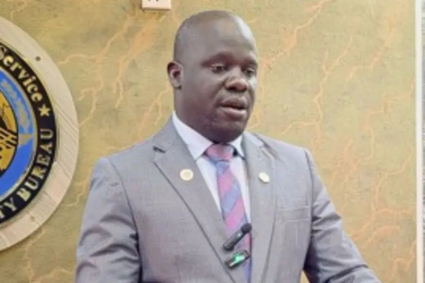
James Oates, Second Secretary of the British Embassy in South Sudan, made the remarks at the graduation ceremony of 35 journalists from Media Development Institutes (MDI) in Juba, Wednesday.
“In South Sudan, as elsewhere, media freedom is vital to an open society and journalists must be able to report and investigate without undue interference. Sadly, however, is that media freedom is under attack across the world including here in South Sudan,” Oates said.
“Independent media is essential to a functioning society, ultimately leading to great stability and prosperity, something which is particularly true amidst the uncertainty of the pandemic we are all living through together,” he added.
According to the Committee to Protect Journalists (CPJ), South Sudan remains one of the most hostile environments for journalists and authorities have demonstrated little commitment to change.
Since 2015, a number of journalists have lost their lives with some facing continuous arbitrary arrests, and torture, with many also released without charges. The harsh media environment forced several journalists to seek asylum out of the country.
Oates said UK believes in and stands for democracy and human rights for which a free and independent media was the essential component.
“It is also fundamental to a prosperous society and good governance when we are able to debate ideas without fear of prosecution.
“We benefit from rationality of everyone. I believe that the government of South Sudan will also help by considering how to make it easier to journalists for their essential work,” he added.
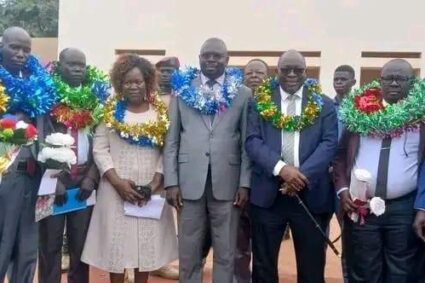
The graduation was attended by senior government representatives including the Baba Medan Konyi, Deputy Minister of Information, Telecommunication, and Postal Services, Sapana Abui, Media Authority, and donor partners.
Medan called on journalists to adhere to their ethics and report accurately and professionally, promising government’s full support to journalists in the country.
“I assure you (journalists) of our support as government to do your work without hindrance,” Medan said.
However, Sapana Abui, Director General for Information and Compliance of Media Authority said most journalists practicing in South Sudan lack professionalism, contaminating working environment for few who are professional.
“Yes, we have few journalists. In South Sudan three categories of journalists exist – normal journalists, smartphone and house journalists. And the last two categories are the source of problem,” Abui said.
The World Press Freedom Index 2019 ranked South Sudan in position 136th. That ranking improved this year as the country moved two places up.
Sitting in position 138th currently, that improve did very little to elevate South Sudan out of countries known for repressive media environments for strides.