

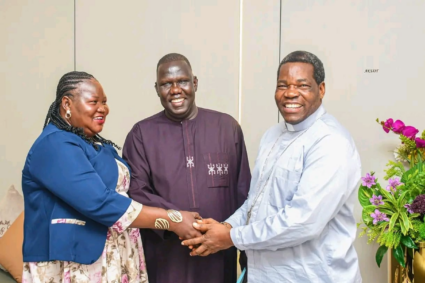

The 16 Days of Activism to End Gender Based Violence has gained another significant move, bringing chiefs together for national dialogue with the grail of terminating early and forced child marriage in South Sudan.
The three-day conference organized by the government with support from UNFPA will review November 2019 commitments made by traditional leaders, which included zero tolerance, championing protection of children and reforming norms and traditions which perpetuate child marriage.
Minister of Gender, Child and Social Welfare, Aya Benjamin Warile said it was crucial in a bid to bringing an end to early and forced child marriage in communities.
“The Chiefs are the custodians of the traditions and customs in South Sudan. They play a big role in the country and any country that wants to make changes at the community level must start with chiefs.
“We all want a developed and progressive South Sudan, and to achieve this, we need to work to end child marriage as one of the impediments to development in the country,” Aya said.
The 16 Days of Activism to End Gender Based Violence compelled the government to operationalize Special GBV Court formed five years ago with an order from President Salva Kiir.
The court will accelerate adjudicating sexual and gender-based violence cases which has tarnished the country’s image with regional and international communities casting blame on the government over the past four years.
Aya promised her ministry’s commitment and the government to end all forms of GBV, including child marriage in South Sudan as the world enters last decade of 2030 Sustainable Development Goal’s deadline.
According to UNFPA Deputy Country Representative, Dr. Chris Oyeyipo, two out of five women in South Sudan encounter child marriage while three out ten girls conceive before witnessing their 18th birth day, promoting intergenerational poverty with devastated impact on women’s health and rights.
“There is no single solution to ending child marriage, gender-based violence and preventing adolescent pregnancies. To achieve this goal, we must invest in a holistic change as outlined in the Action Plan.
“Ensuring legal reform and enforcement, access to quality education and sexual and reproductive health information and services, promoting girls, empowerment and most importantly, changing harmful social norms,” Oyeyipo emphasized.
The event organized by the Ministry of Gender, Child and Social Welfare with support from the United Nations Population Fund (UNFPA) drew together paramount chiefs from the 32 former states and three Administrative Areas.
In its situation report published in October 2019, UNICEF says GBV remains “one of the most critical threats to the protection and wellbeing of women and children in South Sudan”.
The UN agency warned at the time “GBV was already rife prior to the conflict, and is now nearing epidemic proportions”.
Care International, a humanitarian agency delivering emergency relief and long-term international development projects, condemned South Sudan as the most “dangerous” and “disempowering” place to grow up female.