

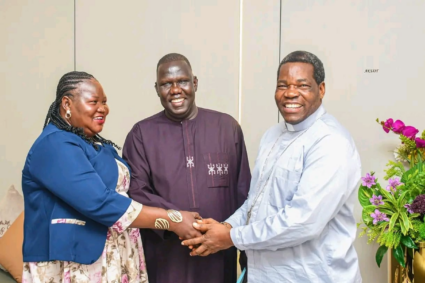

The United Nations Office for Project Service (UNOPS) and the World Food Program with support from European Union have launched a four-year feeder road construction project worth 38 million Euros in South Sudan.
The project aims at strengthening resilience and livelihood of 10000 vulnerable households in Western and Northern Bahr el Ghazal States as well as improving food security system and social cohesion among in the community.
This a part of continuous humanitarian support by the European Union to help elevate suffering of the most vulnerable people in the country through humanitarian agencies.
The project also will ensure building the capacity of small holder farmers and link them with agro-dealers, creating markets and boosting local produces to shun dependence on relief.
Speaking at the launch on Tuesday last week the EU Ambassador, Christian Bader, emphasized the importance of road in social service delivery to people in remote areas, promising EU’s constant support to South Sudan.
He added that without sustainable roads, it was impossible to provide schools, healthcare centers and clean drinking water to rural population as well as maintaining sustainable stability in the country.
“When there is a road, the situation changes overnight – and you will have security and probably you will not have rebellions,” Amb. Bader said.
Road networks is one of the challenges impeding easy movements of people and goods as well as humanitarian aid delivery to vulnerable community across South Sudan.
The Minister of Road and Bridges, Simon Mijok Mijak said this has been devastated by the conflict and the recent flooding, prompting partners to divert funding’s to humanitarian support to people affected.
“Ever since the pre-post-independence, South Sudan had considerable amount of investment in all sectors like gravel roads which used to be maintained from time to time. Insecurity and instability that have occurred since 2013, all these projects have been affected because most of our donors moved to other areas of humanitarian,” Mijok said.
According to the WFP Representative and Country Director, Mathew Hollingworth, the project would link the small holder farmers to the markets and eventually halt intercommunal hostilities through community working together for common goals.
“To support food systems, to link communities. Because when e link comminutes, when we enable farmers to farm, when we enable farmers to sell, when we enable the community to work with one another then see the real support the community can provide to one another, then we can bring about the end to the environment that enables, sadly the instability in the country,” Hollingworth said.