



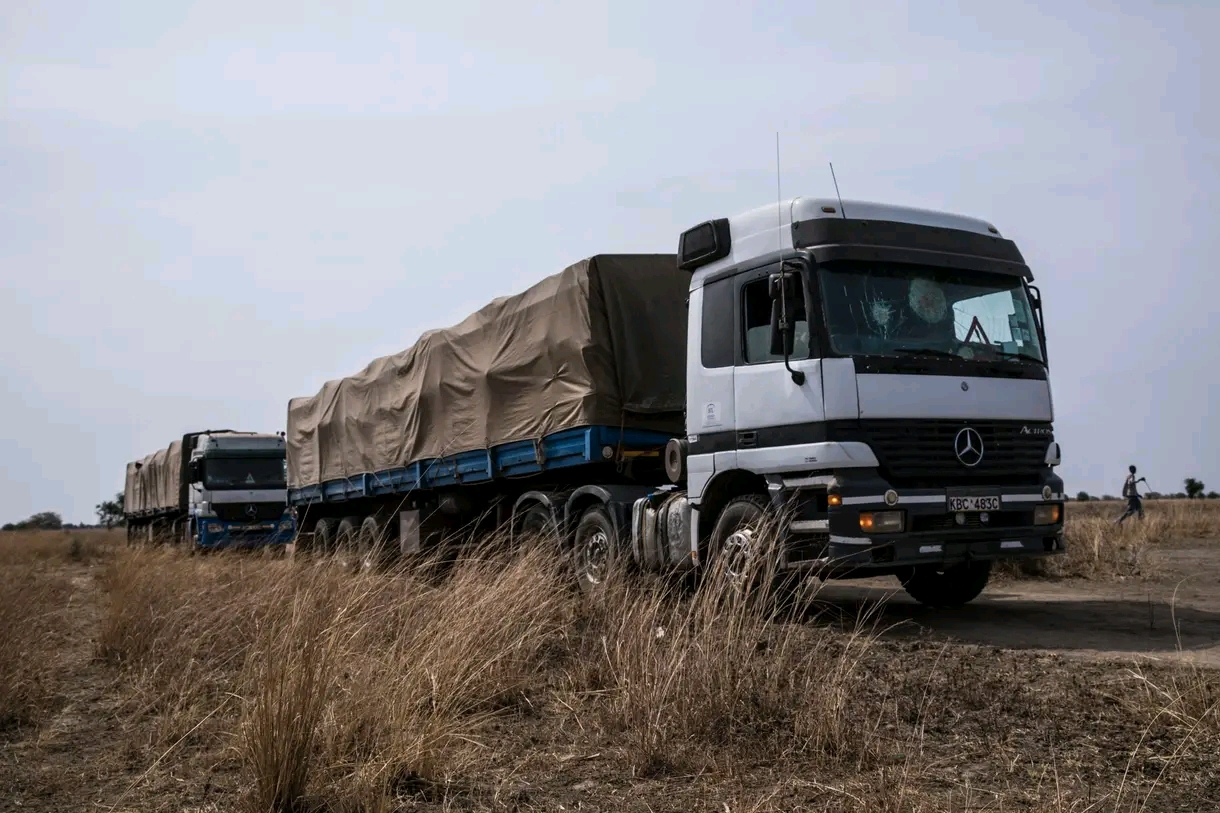
Statement follows an armed assault on humanitarian workers and offloading of more 162 metric tonnes of food assistance enroute Northern Ayod
By Emmanuel Mandella

The United States has condemned an armed assault on World Food Programme (WFP) humanitarian workers in Jonglei State and the forced offloading of more than 162 metric tonnes of food assistance, calling on South Sudanese leaders to protect aid operations and hold those responsible accountable.
The September 29 incident occurred in Chuilbong, Ayod County, where armed youth reportedly assaulted and threatened two humanitarian workers at gunpoint as the river convoy was delivering food to vulnerable communities in Mogok, in northern Ayod.
In a statement issued on Monday, October 12, the US said the attack deprived vulnerable people of humanitarian assistance and reflected a wider pattern of armed actors interfering with relief operations.
“The United States strongly condemns the September 29 armed assault on World Food Program humanitarian workers in Jonglei State and the forced offloading of food meant to feed nearly 20,000 people in need,” the statement said.
The US called on South Sudan’s leaders and all parties to ensure safe and unhindered humanitarian access, prevent further attacks and hold those responsible to account. It also urged the country’s leadership to use public revenue to provide basic services for citizens, describing the humanitarian crisis as manmade.
In a statement published on October 5, WFP confirmed that two of its humanitarian staff members were assaulted and threatened at gunpoint in Chuilbong while the convoy was attempting to reach Mogok and continue towards Ayod South.
The agency said the incident occurred despite extensive negotiations to secure safe passage for the river convoy and in the presence of local authorities.
WFP said the convoy could not proceed safely because of continued resistance and the inability of local authorities to guarantee safe passage or exercise effective control of the situation.
To protect its personnel, the agency instructed the convoy team to offload the food commodities under duress.
WFP said an estimated “162.54 metric tonnes of food assistance” intended for Mogok were offloaded. Its official website states that the supplies were intended to support about 4,400 vulnerable people for three months.
However, a statement published on the United Nations South Sudan website gives a different estimate, saying the same quantity was intended to feed 19,590 people for one month.
WFP confirmed that the remaining convoy team and assets, including personnel from its cooperating partner Action Against Hunger (ACF), were secured and returned safely to Malakal on October 2.
The agency said an additional 291.48 metric tonnes of food allocated for communities in Ayod South were also returned to Malakal without any incident.
WFP condemned the attack and called on all parties to the conflict to respect their obligations under international humanitarian law, protect civilians and civilian infrastructure, and ensure humanitarian personnel and cargo can move safely.
“Aid workers are not, and must never be, a target,” the agency said, urging that humanitarian personnel be protected from violence, threats and intimidation.
The incident highlights the risks faced by humanitarian teams delivering assistance in remote and insecure parts of South Sudan, where river transport can be essential for reaching communities that are difficult to access by road.
When a convoy is stopped or forced to surrender supplies, the consequences extend beyond the immediate security incident. Food may fail to reach its intended recipients on schedule, distribution plans can be disrupted and agencies may face additional costs and security challenges in arranging alternative deliveries.
For communities facing food shortages, delays can increase uncertainty over when their next assistance will arrive.
The incident has also raised questions about the ability of local authorities to protect humanitarian personnel and ensure that aid reaches its intended recipients.
WFP said the confrontation took place in the presence of local authorities and that it could not secure guarantees for safe passage. Its statement does not provide details of any arrests, criminal investigation or disciplinary action following the incident.
As of the information available in the published statements reviewed for this report, no public response from South Sudanese authorities confirming that an investigation has been opened or outlining new measures to protect humanitarian convoys could be verified.
For WFP and other aid agencies, the immediate priority remains ensuring that humanitarian staff can operate safely and that food assistance reaches civilians without threats, coercion or interference.
The incident in Chuilbong underscores the need for concrete protection measures to enable humanitarian assistance reach people in need rather than diversion from its intended purpose.