





WES Education Minister breaks 24-month salary deadlock, elicits deep emotions

By Emmanuel Mandella
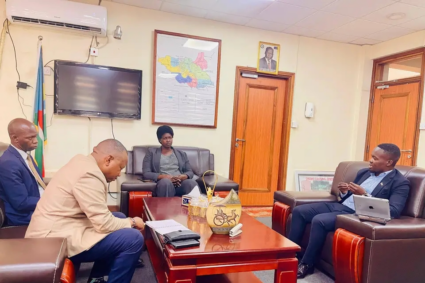
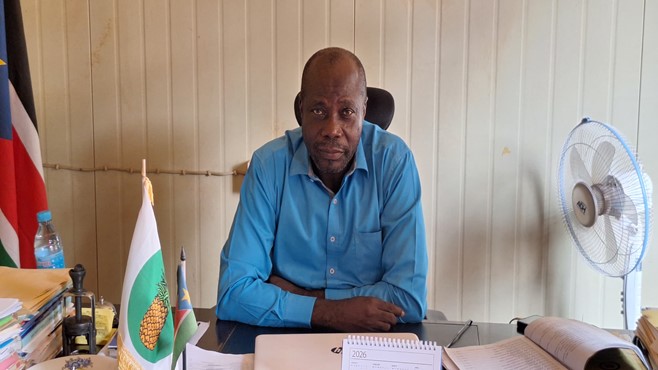
In a rare and decisive move that has sparked hope among long-suffering civil servants, the newly appointed Western Equatoria State Minister of General Education and Instruction, Gibson Bullen Wande, has declared the payment of one month’s salary to ministry staff who had gone more than two years without pay.
Speaking to journalists in his office on Monday, Wande said the situation he encountered upon taking office was “deeply troubling,” describing staff welfare as dire and unsustainable.
“Within just three weeks of assuming this responsibility, I realized that our staff were suffering tremendously. Many could not pay school fees for their children, some were struggling to access basic necessities, yet they continued reporting to work,” he said.
Across the Republic of South Sudan, thousands of civil servants teachers, health workers, and administrative staff have endured over 24 months without regular salaries, largely due to economic instability, reduced oil revenues, inflation, and weak public financial management.
The prolonged salary crisis has severely affected service delivery, particularly in the education and health sectors, where professionals increasingly rely on subsistence farming, borrowing, or humanitarian aid to survive.
In Western Equatoria State, the education sector has been among the hardest hit. Teachers and ministry staff have continued working despite unpaid wages, a situation many describe as “sacrifice beyond duty.”
Minister Wande revealed that his initial plan was to channel salary payments through the banking system, encouraging staff to open bank accounts.
However, the proposal was met with resistance.
“They told me very clearly that even if they open bank accounts, there is no cash in the banks. So the problem was not only payment, but access,” he explained.
Faced with this reality, the Minister reached out to several private companies for support. One company whose identity was not disclosed agreed to advance one month’s salary with interest, allowing immediate relief to staff.
“This was not a permanent solution, but it was necessary. Our people have waited for too long. This is step one, and step two will definitely follow,” Wande emphasized.
The payment triggered emotional reactions among ministry staff, many of whom described the moment as both relieving and symbolic.
Rhoda Elisa Tata, Director for Gender Equity and Inclusive Education, said the salary payment restored dignity and hope among staff.
“This moment is emotional for us. For two years, we worked without salaries, and it affected our welfare and our ability to deliver services. This effort shows that leadership is listening,” she said.
She added that consistent salary payment is critical, especially for staff working on gender equity and inclusive education, areas often neglected during crises.
Similarly, Mr. Anthony Makana Arkangelo Titayo, Deputy Director for Quality Promotion and Standards, described the move as a turning point.
“For two years, I never received my salary, but we stayed because we love our work. The new Minister seems to be for the people. This gives us hope that real change has started,” he said.
Other staff members, who spoke on condition of anonymity, said the payment boosted morale and renewed their commitment to public service.
“This one month salary means food, school fees, and dignity. It shows leadership can make a difference if there is will,” one staff member remarked.
Addressing rumors circulating on social media alleging that the ministry had transferred large sums of money into a secret account, Wande dismissed the claims as false and misleading.
“This is propaganda. Our obligation is clear: to ensure civil servants receive their rightful dues. Anyone seeking clarification should come directly to the ministry,” he said.
He reiterated his commitment to transparency and accountability, stressing that staff welfare would remain a top priority.
While one month’s salary does not resolve the broader national salary crisis, observers say the move demonstrates how proactive leadership at state level can cushion the impact of national economic challenges.
For ministry staff who endured two years without pay, the payment is more than money it is recognition, reassurance, and a sign that change, though slow, is possible.