



From Agreement to Action: Upper Nile as a Test of South Sudan’s Peace


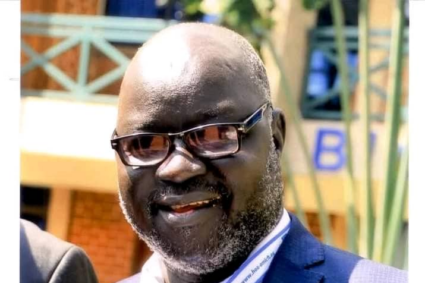
By William Sunday D. Tor
When South Sudan’s Revitalized Agreement on the Resolution of the Conflict (R-ARCSS) was signed in 2018, it was sold to the public as the beginning of the end of war and the opening of a path toward lasting peace. Yet, years later, the reality on the ground tells a very different story. Nowhere is this gap between promises on paper and life on the ground more evident than in Upper Nile State.
Upper Nile is not a sideshow in South Sudan’s peace process. It is one of the main theatres where the country’s multiple wars, political rivalries, and ethnic tensions have played out. What happens there will either validate or expose the fragility of the peace agreement. If peace cannot be implemented meaningfully in Upper Nile, then the entire agreement stands on shaky ground.
In Juba, political elites and negotiators often speak the language of power-sharing, security arrangements, and constitutional reforms. But peace is not experienced in conference halls; it is experienced in counties, villages, markets, and along the roads where people try to move, trade, and live without fear.
A recent visit to Upper Nile revealed a disturbing picture. Officially, the country has returned to the system of ten states. In practice, however, the social and psychological geography of the former 32 states still shapes how people move and how they see one another. Many citizens from certain communities no longer feel safe entering counties dominated by other groups. Fear, suspicion, and invisible boundaries continue to dictate daily life.
What this means is simple but alarming: while administrative maps have changed, the mindset of “ethnic enclaves” has not. The spirit of Greater Upper Nile as a relatively integrated region has been badly eroded. Instead of a shared space, Upper Nile is increasingly experienced as a patchwork of zones where some can move and others cannot.
The former 32-state system was not merely an administrative experiment. On the ground, it hardened perceptions that each ethnic community should be politically confined to “its own” state or county. That system may have been repealed on paper, but its legacy survives in the form of unwritten ethnic borders and social no-go areas.
From an ethnic conflict analysis perspective, Upper Nile is now facing a multi-layered crisis:
– A heavy legacy of violence, displacement, and trauma.
– Competition among local and national elites over power, territory, and resources.
– A deep sense of exclusion and grievance across several communities.
Ignoring these structural drivers and pretending that a national agreement alone will fix them is a dangerous illusion. Implementation cannot be reduced to ticking boxes in Juba; it must confront the lived realities of mistrust and insecurity in places like Upper Nile.
The government of Upper Nile stands at the frontline of peace implementation. Its responsibility goes far beyond routine administration. It has a political and moral duty to help move the state from fragile coexistence toward sustainable peace.
For Upper Nile State to meaningfully implement the R-ARCSS, there is an urgent need for political stability and continuity in the state’s leadership. Constant changes at the top have repeatedly disrupted policy, undermined confidence in state institutions, and contributed to renewed insecurity and non-implementation of key provisions of the peace agreement. Abrupt removal of heads of the Upper Nile State government in the past has not only deepened uncertainty but has also emboldened spoilers who benefit from power vacuums and leadership crises.
In this context, giving the current Governor, H.E. Jacob Dollar Rout, the space and time to govern is not about personalities; it is about institutional stability. The current administration has started to restore a measure of calm and confidence among communities, and premature or politically motivated changes risk reversing these fragile gains. Where governors are frequently removed without clear, transparent justification, local actors receive a dangerous message: that peace is negotiable, and that violence and lobbying from armed or partisan groups can reshape state leadership at will.
For the state government to play its role effectively, it must act on at least three fronts:
1. Security and Protection of Civilians : The authorities must work in genuine partnership with national security institutions, traditional leaders, and monitoring mechanisms to prevent local clashes and protect civilians. Reactive statements after violence are not enough; proactive prevention is required.
2. Meaningful Community Reconciliation: Upper Nile is home to ethnically diverse communities whose relations have been torn apart by war and cycles of revenge. The government needs to promote structured dialogue processes that tackle land disputes, resource competition, and historical grievances. Reconciliation must be locally owned, facilitated by trusted figures, and supported—but not controlled—by the state.
3. Linking Peace to Services and Development: No ceasefire will hold if people see no tangible improvements in their daily lives. Roads, schools, clinics, water points, and livelihoods are not “development luxuries”; they are pillars of peace. When unemployment, poverty, and lack of services persist, armed mobilization remains an attractive option for frustrated youth.
Many sons and daughters of Upper Nile now occupy senior positions in the revitalized transitional government. Yet far too many live almost permanently in Juba, while their constituencies remain trapped in insecurity and social fragmentation.
These leaders know better than anyone who holds illegal weapons, who mobilizes youth for violence, and where the next conflict flashpoint might be. Their duty is not simply to attend high-level meetings in the capital, but to return regularly to their people, engage directly with local actors, and persuade those holding guns that their future is safer in civilian life, not in renewed rebellion.
If political leaders stay distant from their communities, the language of peace will remain elitist and hollow—spoken on podiums, but unheard in the villages.
Politicians alone cannot heal Upper Nile. Academics, journalists, students, graduates, youth and women leaders, and religious figures from the state all have vital roles to play.
These actors shape public opinion and social narratives. Local radios, community forums, churches, mosques, and schools can either amplify hate speech and victimhood, or they can become platforms for peace, reconciliation, and critical reflection on past atrocities.
Upper Nile, with its rich history of coexistence, has the potential to pilot community-based reconciliation models rooted in local culture and values. Initiatives led by credible and respected individuals at the grassroots often succeed where distant directives fail. Peace that grows from below is more resilient than peace imposed from above.
The road to stability in Upper Nile is undeniably difficult. The state faces persistent insecurity, weak institutions, political fragmentation, proliferation of arms, and deep mistrust between communities. All of this is real. But turning these challenges into excuses for inaction is the surest way to guarantee further collapse.
What is needed instead is a stronger partnership between national and state authorities, and a clear decision that local governance and citizen protection are political priorities, not afterthoughts. Leaders must be willing to put the interests of ordinary people above narrow political calculations.
To move from commitments on paper to real change in Upper Nile, several practical steps are essential:
– Empowering state institutions with real resources and decision-making authority.
– Ensuring inclusive leadership that reflects all major communities and speaks the language of citizenship, not sectarian patronage.
– Accelerating credible disarmament, demobilization, and reintegration (DDR) programs, tied to economic opportunities and social reintegration for ex-combatants.
– Expanding civic education about the peace agreement and citizens’ rights, so that people understand what has been promised in their name.
– Establishing political and social mechanisms that oblige national leaders from Upper Nile to maintain regular, meaningful engagement with their home areas.
Above all, peace in Upper Nile must belong to the people of Upper Nile themselves. National agreements and international support can provide frameworks and resources, but only local ownership can turn fragile calm into durable peace.
Upper Nile has suffered enormously, but it also holds powerful reserves of resilience and a long memory of coexistence. The current peace agreement offers a historic chance to turn the page on destruction. Whether that opportunity is seized will depend less on speeches in Juba and more on decisions taken in Malakal, Baliet, Fashoda, Maban, Panyikang, and other localities across the state.
If the state government is allowed to function with stability, if leaders return to their communities, and if civil society chooses to stand firmly on the side of reconciliation rather than silence, Upper Nile can become a living example of what real implementation looks like.
The journey from war to peace is hard, but it is still possible. The time for excuses is over. What Upper Nile needs now is action, unity, and leadership that puts the lives and dignity of its people above every other consideration.
May God Almighty bless our beloved country
William Sunday D. Tor can be accessed through his email: williamtor2011@gmail.com.