
$3M initiative launched to promote peacebuilding, cushion displaced families in Upper Nile

The initiative aims to strengthen local governance and community engagement structures, ensuring that the displacement-affected populations have a meaningful voice in decisions that affect their lives
By Emmanuel Mandella
In a major stride toward cushioning displaced families, a landmark $3 million peace building initiative was officially launched in Malakal on Thursday, under the theme “Towards Durable Solutions in Greater Malakal, Upper Nile State.”
The project, supported by the United Nations Peace building Fund- the United Nations Development Program prevention and peace building arm, in partnership with the Ministry of Peace building, the International Organization for Migration (IOM), and the Danish Refugee Council, aims to provide long-term solutions for thousands of internally displaced persons (IDPs), returnees, and host communities still grappling with the aftermath of war and climate shocks.
Speaking during the launch at the Malakal Youth Center, Ms. Natasha Kunama, Program Advisor and UNDP representative, emphasized that the time for practical peace is now.
“This project is not just about relocation or resettlement, it’s about restoring dignity. It is a timely, strategic, and community-rooted response to one of the most pressing challenges in South Sudan protracted displacement.”
Currently, more than 40,000 people remain confined within the Malakal Protection of Civilians (PoC) site, with thousands more recently returning from Sudan amidst escalating regional violence. The surging numbers are putting immense pressure on already fragile services and escalating tensions over land, livelihoods, and access to resources.
The 24-month initiative will empower over 200,000 people, with 50% of the beneficiaries being women through sustainable livelihoods, improved infrastructure, better housing, and inclusive community governance structures that promote peaceful coexistence.
Furthermore, Ms. Kunama emphasized the transformative gender dimension of the project, citing that:
“Over 42% of the budget is committed to advancing gender equality. We don’t just see women as victims of conflict but we recognize them as agents of peace.”
Meanwhile, youth, often caught between trauma and unemployment, will also be central to the effort. The project will channel resources into skills development and community innovation, positioning young people as drivers of peace and reconstruction.
The initiative aligns with national frameworks such as the South Sudan Durable Solutions Strategy and the Action Plan on Return, Reintegration, and Recovery (2024–2028), offering a coordinated roadmap to sustainability.
“This is not a standalone effort, it is part of a broader ecosystem of peace building that integrates governance, recovery, gender equity, and community-led development,” Kunama said.
Officials from the Ministry of Peace building and the Upper Nile State government applauded the launch, affirming their commitment to walk side-by-side with communities and partners in the project’s delivery.
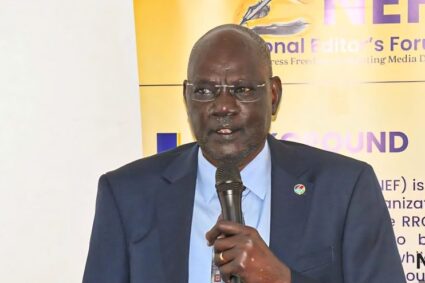
“We have done a lot on humanitarian support and initiatives. This is the time to move forward. This project sets the base for Upper Nile State to move towards development. We cannot rely on humanitarian support forever,” the Undersecretary of the Ministry of Peacebuilding, Hon. Pia Philip, said.
On his part, Hon. Nyanuer William Nyuon, the Acting Minister for Peace building in Upper Nile State urged the communities to embrace peace and unity. Hon. Nyuon acknowldged the progress made in restoring peace in the state after months of turmoil, and challenged all stakeholders to rise above division and support cohesion.
“We have to prepare for the war aimed at reclaiming peace. It is not an easy venture, but we have to be prepare and play the role of peacemakers. So much progress has been made over the last three months. And we can now say that the counties within the state are returning back to business,” the state official said, amidst applause.