




Activist warns S. Sudan’s oil transit endangered by Sudan’s crisis

A civil society activist has expressed concern over the fate of South Sudan’s oil transit to the international market following the ongoing political turmoil in Sudan.
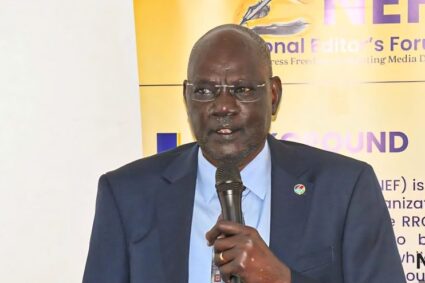
The Executive Director of Community Empowerment for Progress Organization (CEPO) Edmund Yakani said the military take over power in Sudan has a direct impact on the country’s main source of revenue.
“Obviously, [the military power takeover in Sudan] will directly affect South Sudan oil transit to the international market. So we should have a concern,” said Yakani.
South Sudan’s oil transit was recently interrupted when residents of Eastern Sudan protested over poor service delivery and exclusion from socio-political activities, resulting in the blockage of the oil terminal in Port Sudan.
Leaders in Sudan then took a quick move and agreed with the protesters who were mainly members of the Easter Track to the October 2020 Juba Peace Agreement between the deposed government and Revolutionary Front.
Had there been a further delay, the blockage would have caused negative repercussions on the economy of Africa’s youngest nation.
The Minister of Information and Government Spokesperson Michael Makuei Lueth on Monday declined to comment on Sudan’s issues saying it did not concern South Sudan.
“What do Sudan issues have to do with South Sudan?,” said Makuei when contacted for comment on the ongoing Sudan political development.
But Mr Yakani said: “Remember when Eastern Sudan reacted about the sitting in Khartoum, they detained our oil transit through the Red Sea for quite a long period. So this will have a direct impact on the South Sudan oil transit to the international market. So I am wondering why Makuei is saying that.”
However, in September, Makuei told the media that the government had considered halting the oil production should the protestors continue to block the transit.
‘‘It was yet unclear whether the ongoing Sudan conflict will also affect the transit of the oil, and if it happens what will be the position of the government,’’ Yakani said.
Earlier, a senior government official anonymously said the better option for South Sudan is to consider reactivation of the LAMU pipeline project via Kenya.
South Sudan currently produces nearly 200, 000 barrels per day which it exports through the Sudanese port following the 2012 deal that allowed the Sudanese government to receive $25 per barrel of crude oil.