



International observers have argued that weak institutions, limited oversight mechanisms, and lack of transparency have created opportunities for public funds to be diverted away from essential services
By The City Review
The United Kingdom has warned that individuals implicated in corruption and the misuse of public resources in South Sudan could face a new wave of targeted sanctions, as international partners intensify pressure on the government to strengthen accountability, transparency, and responsible management of national wealth.
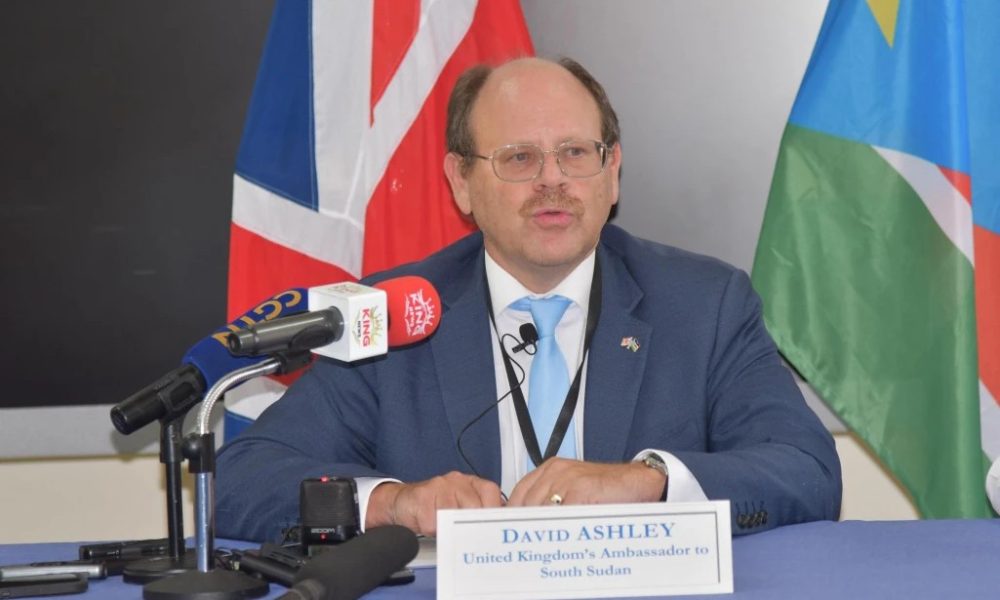
Speaking during a media briefing in Juba on Thursday, British Ambassador to South Sudan David Ashley said London is prepared to use its sanctions regime against individuals found to be involved in corrupt activities, particularly where domestic accountability mechanisms fail to deliver justice.
The warning comes amid growing concerns from international partners and anti-corruption watchdogs over the continued loss of public resources in a country already struggling economically.
“We are committed to supporting efforts aimed at addressing corruption, including the use of sanctions where necessary,” Ashley told journalists.
The ambassador explained that the UK possesses legal instruments allowing it to impose restrictions on individuals accused of corruption, including asset freezes, travel bans, and other financial penalties. Such measures, he noted, could complement existing sanctions already imposed on individuals accused of undermining peace, violating human rights, or obstructing implementation of the peace agreement.
Ashley stressed that international sanctions are often used when national justice systems are unable to hold powerful individuals accountable.
“In situations where domestic processes are unable to achieve the necessary level of accountability, international sanctions can serve as an important tool to demonstrate that certain actions are unacceptable,” he said.
The UK’s position reflects a broader international effort to curb corruption in the country, where concerns over financial mismanagement have persisted in some sectors since independence.
Over the years, the United States, European Union, United Nations, and other international partners have imposed various sanctions on South Sudanese political and military figures.
The United Nations Security Council has maintained an arms embargo on South Sudan, enforcing travel bans and asset freezes against selected individuals considered to be undermining peace and security.
Similarly, the United States has utilized the Global Magnitsky Sanctions Program, targeting individuals suspected of involvement in large-scale corruption and human rights abuses. The sanctions typically restrict access to international financial systems and freeze assets held under U.S. jurisdiction.
The European Union has also adopted restrictive measures against individuals accused of destabilizing the country, while international financial institutions have repeatedly called for reforms aimed at improving transparency in public finance management.
Corruption allegations in South Sudan have frequently centered on the management of oil revenues, which remain the country’s primary source of income.
International observers have long argued that weak institutions, limited oversight mechanisms, and lack of transparency have created opportunities for public funds to be diverted away from essential services such as healthcare, education, infrastructure, and social protection.
Reports by both domestic and international watchdog organizations have repeatedly highlighted concerns over ghost workers on government payrolls, inflated procurement contracts, unaccounted expenditures, and weaknesses in public financial management systems.
Ashley urged South Sudan’s leaders to prioritize citizens’ welfare by ensuring that both oil and non-oil revenues are directed toward national development and service delivery.
“The highest priority should be ensuring that public resources are used for the benefit of the people of South Sudan,” he said. “We will continue to advocate for greater accountability and transparency in the management of those resources.”
Several countries have successfully reduced corruption through strong institutions, independent anti-corruption agencies, digital government systems, transparent procurement processes, and strict enforcement of financial regulations.
Countries such as Rwanda, Botswana, and Singapore are often cited as examples where robust anti-corruption reforms, political commitment, and effective oversight mechanisms have helped improve governance and public confidence.
Analysts argue that South Sudan could benefit from similar reforms by strengthening anti-corruption institutions, improving auditing systems, enhancing parliamentary oversight, and ensuring that public officials are held accountable regardless of their position.
As South Sudan moves toward the planned December 2026 elections, governance and accountability are expected to remain central issues in both domestic and international discussions.
Political analysts say the UK’s warning sends a strong message that the international community is increasingly linking economic assistance, diplomatic engagement, and political support to measurable progress on transparency and good governance.
For many South Sudanese citizens facing economic hardship, the challenge remains whether stronger international pressure will translate into meaningful reforms that improve service delivery, restore public trust, and ensure national resources are used for the benefit of the general population.
“The fight against corruption is not only about punishment,” a governance expert in Juba noted. “It is about creating systems that protect public resources and ensure they contribute to peace, development, and the future of the country.”