


South Sudan to pay its own EAC lawmakers in newly passed resolutions

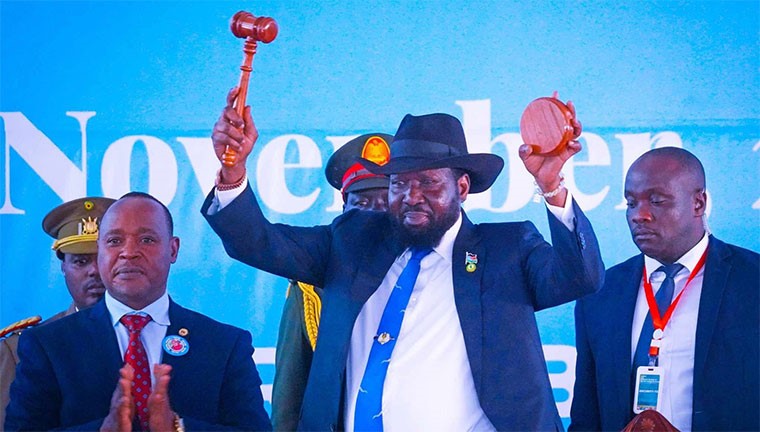
Observers concerned new resolution could strain some of the partner members, including South Sudan, who are currently shouldering unmet financial obligations in the bloc
By Emmanuel Mandella
South Sudan will assume responsibility for paying the salaries and allowances of its representatives to the East African Legislative Assembly (EALA) after regional leaders approved a major policy reform shifting the financial burden from the regional bloc to partner state governments.
The decision was adopted during the 25th Ordinary Summit of Heads of State of the East African Community (EAC) held on 7 March 2026 in Arusha, Tanzania, according to the official communiqué released at the end of the meeting.
Under the new arrangement, members of the regional parliament will no longer be paid from the central EAC budget. Instead, each partner state will be required to cover the salaries and welfare of its own lawmakers serving in EALA through their respective national legislatures.
“The Summit decided that members of EALA serving in the Community should be paid by their respective national assemblies with effect from December 2027 after the end of tenure of the current Assembly,” the communiqué stated.
For South Sudan, the resolution means the Transitional National Legislative Assembly (TNLA) will take over financial responsibility for the country’s nine representatives serving in the regional parliament once the current EALA term expires in December 2027.
Regional reform to ease budget pressure
The decision forms part of broader reforms aimed at restructuring how regional institutions are financed and reducing pressure on the EAC’s central budget, which has faced persistent funding challenges due to delayed contributions from member states.
The East African Community, which brings together eight partner states that include Kenya, Uganda, Tanzania, Rwanda, Burundi, South Sudan, the Democratic Republic of Congo, and Somalia relies on financial contributions from its members to fund institutions such as the East African Legislative Assembly and other regional programs.
Officials say the new arrangement is intended to ensure sustainability of the regional parliament while encouraging greater accountability from partner states regarding their participation in the bloc.
Financial implications for South Sudan
However, the shift could present new financial challenges for South Sudan, which has struggled in recent years to meet its obligations both domestically and within the regional bloc.
Civil society leaders have warned that the policy may place additional pressure on the government’s already strained finances.
Edmund Yakani, Executive Director of the Community Empowerment for Progress Organization (CEPO), said the reform highlights the urgent need for South Sudan’s leadership to reassess the country’s level of participation and financial commitment to the East African Community.
“The welfare and duties of the East African Legislative Assembly members are now being transferred to the responsibility of member states,” Yakani said. “This means South Sudanese representatives at EALA will now be catered for by the government of South Sudan.”
Yakani explained that the decision was partly influenced by the poor record of some member states in remitting their subscription fees to the EAC Secretariat.
South Sudan is among the countries with a weak record of regular contributions, a situation that has previously affected its standing within the regional bloc.
Concerns over influence in the bloc
EAC Heads of State and government representatives at the recent EAC Summit in Arusha, where Foreign Affairs Minister, Hon. Monday Semaya represented President Salva Kiir.
According to Yakani, the new arrangement could affect the effectiveness of South Sudan’s representation in regional institutions if the government fails to ensure consistent financial support for its lawmakers.
“Now adding the responsibility of paying EALA members creates an additional burden to the government,” he said. “This means a lot for the fate of South Sudan’s effectiveness and influence within the East African Community.”
He also noted that South Sudan recently missed an opportunity to secure the position of Secretary General of the East African Community — a post that was expected to rotate to Juba — reportedly due to delays in paying membership contributions.
“That position was supposed to come to South Sudan, but Tanzania took it over because we failed to pay our subscription fees,” Yakani said.
Despite the challenges, Yakani said the country still holds important positions within regional institutions, including the appointment of a South Sudanese judge to the East African Court of Justice (EACJ).
Call for quick government action
Yakani urged the country’s leadership, including the President and the Speaker of Parliament, to organize a national consultation on South Sudan’s participation in the regional bloc.
“My appeal goes to the leadership of the country to organize a brainstorming session on the status of South Sudan’s participation in the East African Community,” he said.
He emphasized that improved financial commitment to the EAC could help South Sudan secure more opportunities for its citizens within regional institutions.
“As civil society, our responsibility is to advocate for the government to comply with timely remittance of subscription fees so that South Sudanese citizens can benefit from the privileges of the East African Community,” Yakani added.
The new policy on EALA remuneration is expected to take effect in December 2027, giving partner states time to adjust their national budgets and prepare for the transition.
For South Sudan, analysts say the reform will test the government’s ability to balance domestic financial challenges while maintaining active participation in one of Africa’s most important regional integration blocs.
Utilities
“My appeal goes to the leadership of the country to organize a brainstorming session on the status of South Sudan’s participation in the East African Community.”- Edmund Yakani, civil society activist.