


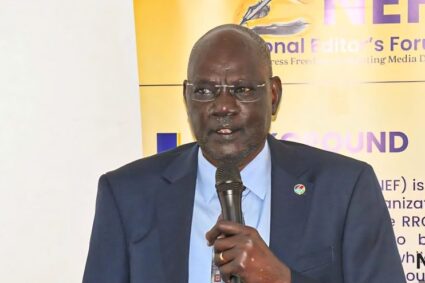


According to Yakani, the framing of the transitional period’s extension has been done without a clear and actionable implementation matrix, raising alarms as time continues to slip away
By Emmanuel Mandella
The Tumaini initiative has emerged as a pivotal test of the political will and dedication of South Sudan’s incumbent leaders to advance the country’s transitional process, an activist has said.
Over the last five years, the implementation of the Revitalized Agreement on the Resolution of the Conflict in South Sudan (R-ARCSS) has seen significant delays, attributed largely to a lack of genuine commitment from the current government to steer the nation from instability to peace.
Mr. Edmund Yakani, the Executive Director of the Community Empowerment for Progress Organization (CEPO), said it is now evident that the slow pace of the transitional process has been driven by limited political interest among top leaders.
“The President and the First Vice President need to demonstrate their primary responsibility by holding their subordinates accountable,” Yakani said.
He highlighted that the framing of the transitional period’s extension has been done without a clear and actionable implementation matrix, raising alarms as time continues to slip away.
One of the significant steps taken that underscores this limited commitment was the obstruction of the Tumaini Initiative, which Yakani believes the Initiative aimed to offer a tangible framework for a genuine transition from conflict to peace.
He noted that the failure to conclude this initiative signals a presidency more inclined to actions that spoil the transitional process rather than those aimed at securing it.
“The presidency bears primary responsibility for any fallout from the Tumaini initiative,” Yakani warned.
The activist continued that the last five years had seen extensive financial and time investments supposedly allocated to the transitional process, yet tangible results remain absent.
He said instead, individuals allegedly diverted funds meant for the peace process for personal enrichment.
CEPO has raised concerns that the growing division among political leaders split between pro-Tumaini and anti-Tumaini factions could further derail efforts for a smooth transition.
Yakani’s statements underscore that the two-year extension of the transitional period, while promising elections by December 2026, might face significant challenges.
“The signs are clear; there is limited interest in holding credible elections within the stipulated timeframe. The desire to remain in power under the guise of extended transitional periods is evident,” he stated.
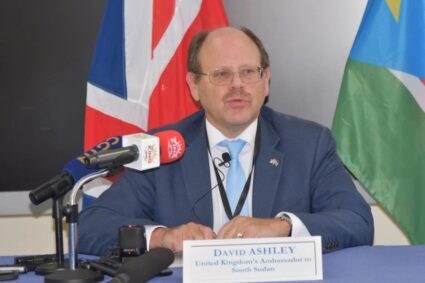
In a joint statement issued last Wednesday, the Troika, which includes Norway, the United Kingdom and the United States of America, urged the South Sudan leaders to embrace the Nairobi peace talks, dubbed Tumaini Initiative, in a bid to realize sustainable peace in the country.
The group cautioned against lack of political goodwill among leaders, stating that they would not support a status quo that promotes the privileges of a few over the welfare of the people of South Sudan.
“The international community must be clear that we will not support a status quo that promotes the privileges of a few over the welfare of the people of South Sudan. We agree that the forthcoming extension period is absolutely essential for the transitional government to demonstrate to the international community and the people of South Sudan its commitment to implement the peace agreement,” the group stated.
On the other hand, various bodies, including the Reconstituted Joint Monitoring and Evaluation Commission, have urged the government to speed up the implementation of the pending tasks in the peace agreement to open the window for seamless crucial processes, including the elections.
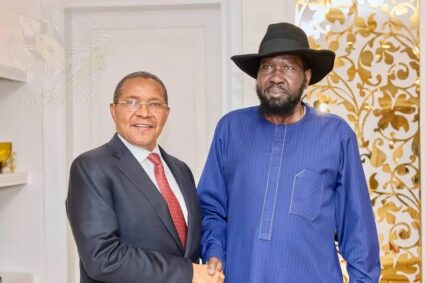
In a latest development, last week, South Sudan’s High-Level Standing Committee, led by Minister Martin Elia Lomuro, delivered a message from President Salva Kiir to his Kenyan counterpart, William Ruto, focusing on South Sudan’s initiative to promote the Tumaini Peace Talks within the Intergovernmental Authority on Development (IGAD) region, aimed at advance peace efforts.
Meanwhile, with key areas still pending in the agreement, bodies now ask parties to the peace agreement to front-peddle and ensure the agreement is implemented to open the door for election among other people-centric decisions.
CEPO has raised concerns that the growing division among political leaders split between pro-Tumaini and anti-Tumaini factions could further derail efforts for a smooth transition.