



Why there is reason to believe all institutions have a share of problem in S. Sudan

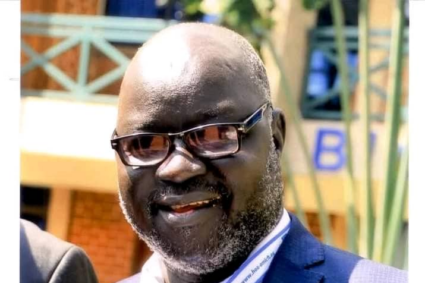
By Agar Mayor Gai-Makoon
Often times, people in South Sudan get caught in a two-fold berth whereby one part of the responsibility is to act and the other is engaging in a blame game. The latter has always been the norm of many in this country. For more than a decade of independence, more reasons for instability and lack of economic growth have always surfaced, but not a single institution or individual implicated in those problems has accepted the responsibility and made the needed reforms. Instead, institutions have continued to fail the state, and all they have to say is that the country is unstable and unsuitable for growth and prosperity.
They are waiting for peace and stability. There is nothing absolutely wrong with that. Peace and stability are the cornerstones of socio-economic transformation for any country. But the problem with such a wait is that it reduces the chances of generating possible solutions to the problem because it puts in the workings of institutions the impression that they are not part of the problem. So, they become reluctant thinking that someone somewhere will have to first create a conducive working environment for the institutions to execute their functions.
This is what has crippled the institutions in South Sudan. The other reason is that internal institutional problems could be buried in the ashes of a bigger state problem. Take for instance, mismanagement of resources in institutions is a potential suffocating agent of growth and delivery of services. And this is a prevalent practice in South Sudan’s institutions. Why do not the institutions talk about it? It is because there is a political conflict that has clouded the minds of many South Sudan citizens. So, institutions use this conflict as a scapegoat to cover their own institutional failures that have led to a lack of growth.
There are also many complaints about criteria of recruiting staff to various institutions. Conflict here has not any contribution because if it had, there would be no recruitments taking place. The institutions would be functionless. But the fact that there is still a population that has found something negative to say about recruitment processes indicates that for sure, institutions have a lot more problems than we perceive. There is a need for institutional reforms.
I know it won’t make a bigger difference in our quest for a stable South Sudan, but it will have reduced the problem load and allow each and everyone to contribute to bringing rightful solutions to our problem. We all know what our problem is—it is political or a leadership problem. All the rest, for instance, tribalism, killings and economic meltdown are the results of a political problem. You can see the enormity of this problem, given the tribal and communal fractures and hatred that it has generated among South Sudan tribes and communities. Instigating tribal hatred and conflicts have become the best means for South Sudan leaders to keep themselves in power.
But here is one thing that we have to know. It is easier, more honorable, more respectable and more profitable to do good than the otherwise. Ideally, it means that even the South Sudan leaders who, in spite of their successful schemes to remain in power, are not happy enough. So, what is the essence of one’s actions if they do not make you happy and respected? We have to think about that, and always strive to do good even if it means bad to you at that instant, because the results for a good and acceptable policy are always great for everyone.
According to Jeremy Bentham, a philosopher and consequentialist ethics thinker, “a good person is one who maximizes overall happiness and minimizes suffering for the greatest number of people”. And basically, this trait fits best with people whose decisions and actions impact a large number of people—the political leaders and the rest. Perhaps, this is what South Sudan requires at the moment. Leaders must have the interests of South Sudanese at heart. And all the actions by them should not put the citizens in war or create fracture lines in our natural tribal fabric. We have time to mend these messes and transform South Sudan into a state built on the foundations of good work and prosperity. Let’s do it now.
The writer has a background in socio-political philosophy. He currently studies Medicine at Ain Shams university, Cairo, Egypt. He can be reached on +201129107334 or thieng.thiengwada@gmail.com.