


Governor Ober to NBGS: Sustainable peace is the only path to real development

By Aguok Chok
Northern Bahr el Ghazal State (NBGS), located in northwestern South Sudan, continues to grapple with developmental challenges rooted in its history of conflict, marginalization, and limited infrastructure. As a region still recovering from the effects of civil strife, the need for inclusive governance, unity, and peace remains critical to its path forward. Governor Simon Ober, who has positioned himself as a proponent of reconciliation and development, is working to build trust and lay a firm foundation for lasting peace and prosperity. His recent consultative meeting with citizens in Juba is part of broader efforts to engage the community in shaping the state’s future.
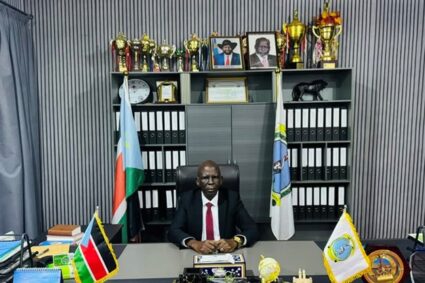
Governor Simon Ober, has urged citizens to uphold unity and peace as the cornerstone of meaningful and lasting development. Speaking during a one-day consultative meeting with members of the Aweil community in Juba, Governor Ober emphasized that without peace and social cohesion, development efforts will remain fragmented and ineffective. The gathering brought together Members of Parliament, community elders, intellectuals, student leaders, women’s groups, and youth representatives to deliberate on the challenges facing the state and to explore solutions together.
“We must embrace the spirit of unity and peaceful coexistence if we are to achieve genuine progress,” Governor Ober told participants. “Our divisions—whether political, ethnic, or social—must not define us. Instead, let us build a common future grounded in mutual respect and shared responsibility.”
Governor Ober reaffirmed his administration’s dedication to good governance, inclusive growth, and citizen-centered leadership. “My government is committed to delivering responsive governance that improves the welfare of every citizen and creates a peaceful, prosperous future for all,” he stated.
During the interactive session, participants raised pressing concerns, including inadequate access to education and healthcare, poor road infrastructure, unemployment, and the limited involvement of women in leadership. Youth leaders called for increased investment in empowerment programs, while women’s groups stressed the urgency of addressing safety, gender equality, and inclusion in policymaking.
In response, Governor Ober acknowledged these concerns and pledged to prioritize them in government planning. He emphasized the critical role of women and youth as co-creators of the state’s future. “You are not merely beneficiaries of development; you are partners. Your voices matter, and your contributions are essential.”
A student leader echoed the optimism generated by the dialogue: “This meeting shows that our leaders are ready to listen. It gives us hope that, together, we can bring change.”
Governor Ober concluded by pledging to maintain open channels of communication and ongoing engagement with communities across the state. “We must speak with one voice, support one another, and move forward together. Our strength lies in our unity.”
The consultative forum is being hailed as a promising step toward building a peaceful, united, and development-driven Northern Bahr el Ghazal. Governor Ober promised to organize similar forums in the future to foster trust and strengthen collaboration between the government and its citizens.