
Community worried over neglect of iconic structures in Yubu Payam

By Emmanuel Mandella
In the forgotten yet historically rich corner of Source Yubu Payam in Tombura County, tucked along South Sudan’s border with the Central African Republic, time has not been kind to the iconic structures that once defined this community’s identity and resilience. And out of fear that such revered structures could slip away their identity, residents are now calling on the government to come to the rescue.
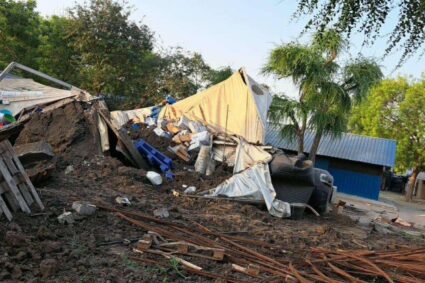
Among the landmarks slipping away is a colonial-era primary school built during the presidency of Sudan’s Ibrahim Abboud. For generations, it served as the educational backbone of Tombura County and the whole of Western Equatoria State, producing distinguished leaders and intellectuals.
But today, the once-solid institution stands roofless and silent its timbers exposed to the sky after a fierce storm ravaged the area.
“That school raised many of us. It is more than just a building. It’s our pride, our story, and our hope,” said Tambua John, a local resident, in an interview with The City Review.
Another local, Patrick Riruyo, who began his education there, recounted the emotional weight of its current state citing that
“It’s heartbreaking to see it smash and if the humanitarian community could become aware, they might step in to help rebuild.”
But the school is not the only treasure whose fate hangs in the balance. Just a few kilometers away, an old regional hospital, a remnant of the British administration which served as a treatment center for sleeping sickness lies in ruin. Once a centre for health services in Western Equatoria, the facility is now unable to serve the people it was built to protect.
This hospital, along with the school, represents more than aging brick and timber. For a border community like Source Yubu, these landmarks are anchors of stability, education, and public health critical elements for peace and growth in a region where borders often blur identities, and access to services is fragile.
Amid the decline, one historic structure stands tall- the Ngboko Missionary Centre.
The centre was founded shortly after the Mupoi Mission and is currently being revived with the support of Bishop Eduardo Hiiboro Kussala of the CDTY and church-led initiatives. However, despite the efforts, residents say, there is need for broader support.
“The chief of Ri-Yubu is ready to cooperate,” said Tambua, affirming the willingness of locals to extend a helping hand.
Preserving these historic institutions in a Payam like Source Yubu serves a greater national interest. When restored, the school could become a center for cross-border educational exchange, foster peace, literacy, and leadership among South Sudanese and neighboring CAR communities.
A functional hospital would not only serve as a vital health access point for populations but also reduce cross-border medical burdens and support regional medical tourism.
Moreover, these sites offer immense cultural and tourism potential. Renovating them could attract attention from heritage and development partners, opening new avenues for investment, cultural preservation, and national pride.
A community’s invitation
The community is now calling on the Ministry of General Education, the Ministry of Health, the Commission for Antiquities and Museums, and international partners like UNESCO and humanitarian agencies to visit Source Yubu. Locals urge immediate assessment and support to restore these institutions before they are lost entirely.
To neglect these places is to erase chapters of a national story still being written. But to restore them is to invest in South Sudan’s future, anchored in its proud past.
“Saving this school and hospital is not charity,” Patrick Riruyo explained. “It’s an investment in our children, our health, and the unity of our nation.”
According to some of the local community members, the institution will boosts cross-border cooperation and enhance collaboration with CAR on health and education.
It could also improve security in the locality, stabilize communities away from border conflicts, boost cultural tourism potential and strengthen heritage sites to attract tourists, historians, and funding.
Meanwhile, these sites could empowers communities through education and healthcare and lay the foundation for long-term development in Western Equatoria State as well as across the country.