


RJMEC warns South Sudan’s December elections face credibility risks amid political disputes and security Gaps

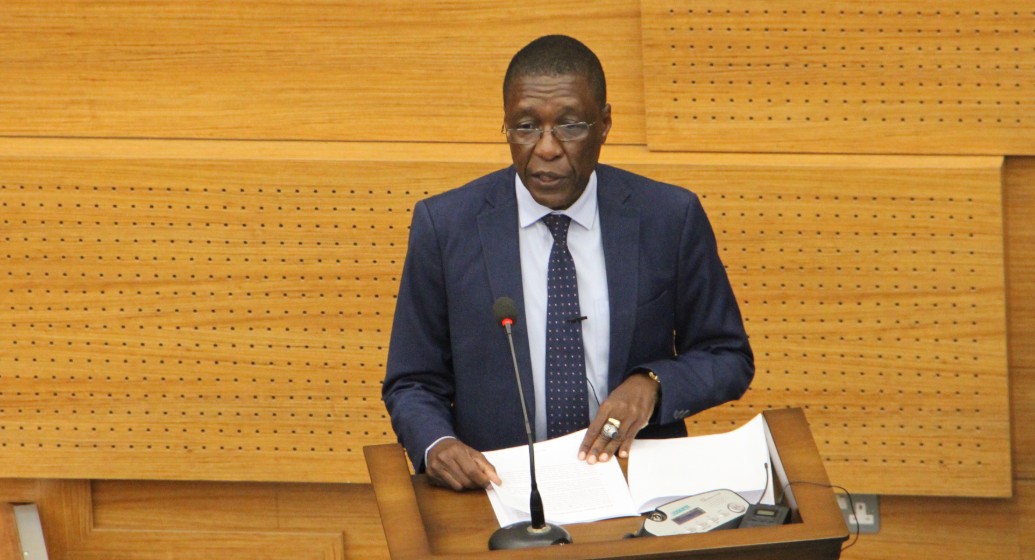
Commission says critical election-related commitments remain outstanding, raising concerns about whether the country has established the political, security and institutional conditions necessary for a credible electoral process.
By Emmanuel Mandella
South Sudan’s planned December 22 general elections could face serious credibility risks as unresolved political disputes, incomplete security reforms and delays in implementing key provisions of the peace agreement threaten preparations for the country’s first elections since independence.
The warning was issued by the Reconstituted Joint Monitoring and Evaluation Commission (RJMEC) in its third-quarter 2026 report on the implementation of the Revitalized Agreement on the Resolution of the Conflict in the Republic of South Sudan (R-ARCSS), released on Wednesday in Juba.
With only two months remaining before the scheduled polls, RJMEC says critical election-related commitments remain outstanding, raising concerns about whether the country has established the political, security and institutional conditions necessary for a credible electoral process.
The commission identified disagreements among peace agreement signatories, continuing insecurity, restrictions affecting political participation and delays in implementing transitional reforms as major challenges confronting the electoral preparations.
It also questioned the legality of amendments to the peace agreement and subsequent constitutional changes, arguing that the process did not follow the procedures prescribed under the R-ARCSS.
The report stated that South Sudan is entering an “increasingly consequential phase of the Transitional Period,” characterized by a lack of consensus among political parties and stakeholders over the legal and political pathway to elections, alongside security concerns and renewed regional diplomatic engagement.
RJMEC cautioned that proceeding towards elections without addressing these challenges could undermine public confidence in the transition and weaken the prospects for lasting peace.
One of the report’s central concerns is the government’s decision to amend the R-ARCSS without following the procedures set out in Article 8.4 of the agreement.
According to RJMEC, the proposed amendments were submitted to the Transitional National Legislature without first obtaining the required endorsement from the commission.
The report states that the amendments “were not endorsed by at least two-thirds of RJMEC voting members as required by Article 8.4 of the R-ARCSS,” describing the process as inconsistent with the agreement.
RJMEC further argued that subsequent constitutional amendments sought to end the transitional period, dissolve the arrangements of the Revitalized Transitional Government of National Unity (RTGoNU) and enable elections to proceed without consensus among all parties that signed the peace agreement.
The commission also raised concerns about the dissolution of the Presidency, describing it as a unilateral decision contrary to Article 1.1.4 of the R-ARCSS.
The agreement provides that the term and mandate of the transitional government should continue throughout the transitional period until elections are held, except as otherwise provided for in the agreement.
The report placed the legal and political arrangements governing the transition at the centre of the debate over the December elections.
RJMEC acknowledged the launch of the Inter-Party Dialogue on September 24, 2026, describing political dialogue as a potential opportunity to address disagreements surrounding the electoral process.
However, the commission said the initiative did not include some political actors, including allies of detained and exiled Sudan People’s Liberation Movement-in-Opposition (SPLM/A-IO) leaders and holdout groups that remain outside the peace agreement.
The report raises concerns about unilateral political decisions, the continued detention of opposition figures and the exclusion of some groups from the dialogue.
The peace monitor said the status of the dialogue remains unclear and called for a more inclusive political process involving all signatories to the R-ARCSS and holdout groups.
“More inclusive genuine political dialogue involving all signatories to the R-ARCSS and the holdout groups is necessary to address the outstanding differences,” the commission says.
Beyond the political and legal disputes, the report identified insecurity as a major obstacle to preparations for the December elections.
RJMEC cited continuing armed confrontations, incomplete Transitional Security Arrangements, inter-community violence and the presence of active armed groups as factors that could weaken public confidence in the transition.
It warned that insecurity and concerns about civic and political space could affect voter registration, campaigning, the safety of candidates, and access to polling and public acceptance of election results.
RJMEC called on the parties to uphold the Permanent Ceasefire, complete priority security tasks, strengthen election security management and provide predictable support to electoral institutions.
The commission’s concerns indicate that the election timetable alone will not determine the credibility of the process. The security environment and the ability of institutions to carry out their responsibilities will also be important.
The report also identified delays in constitutional reforms and transitional justice as outstanding challenges under the peace agreement.
On the permanent constitution-making process, RJMEC said no new progress was recorded during the third quarter of 2026.
The commission attributed the slowdown in momentum partly to the government’s decision to separate the constitution-making process from the conduct of elections.
Despite the challenges, RJMEC identified political dialogue, preparations by electoral institutions and increased regional engagement as opportunities to build consensus ahead of December.
The report notes that regional and diplomatic engagement has continued as South Sudan approaches the scheduled elections.
However, the commission stressed that external engagement cannot replace the responsibility of South Sudanese political parties and the transitional government to implement the peace agreement.
“The primary responsibility for implementation remains with the South Sudanese Parties and the RTGoNU. A peaceful conclusion to the transition will depend on sustained political will and adherence to the commitments contained in the R-ARCSS,” the commission noted, offering various recommendations to the parties.
The commission’s recommendations include inclusive dialogue, respect for the ceasefire, completion of priority security reforms and reliable support for electoral institutions. Such measures would be intended to address some of the conditions RJMEC considers necessary for a peaceful transition and a credible electoral process.
The commission warned that unresolved political differences, continuing security incidents and delays in implementing key provisions of the agreement make sustained engagement essential.
“What is needed is political will and recommitment to the ideals that guided the country over the last eight years,” the report states.