


Activist urges soldiers to refrain from conflict-related sexual violence

While cautioning against the vice, the Executive Director of Community Empowerment for Progress Organization (CEPO) reckoned some men in uniform committed sexual violence during the 2013 and 2016 conflicts.
By James Chatim
June 19, a prominent South Sudanese civil society leader has issued a passionate appeal to the nation’s armed forces to uphold human rights and protect civilians, particularly women and girls, from sexual violence during times of conflict.
The day, observed annually under the auspices of the United Nations, serves as a solemn reminder of the profound physical, psychological, and societal harm caused by sexual violence in war zones. It also amplifies calls for justice, accountability, and prevention of such crimes.
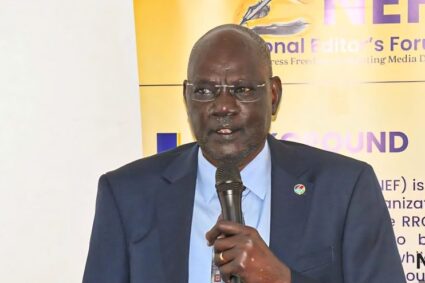
In a statement issued on Wednesday, Edmund Yakani, the Executive Director of the Community Empowerment for Progress Organization (CEPO), urged both the national army and opposition armed groups to strictly observe international and national legal frameworks that prohibit conflict-related sexual violence.
“As a civil society activist from South Sudan, where we are still witnessing active military confrontation between government forces and armed opposition groups, I call on every commander to ensure their troops abstain from committing sexual violence against civilians,” Yakani said.
He highlighted past violations during South Sudan’s conflicts in 2013 and 2016, pointing out that “some men in uniform committed acts of sexual violence in the face of conflict.” These violations, he emphasized, are not only crimes under South Sudanese law but also breaches of international humanitarian law and human rights.
South Sudan is a signatory to key international instruments aimed at preventing sexual violence in conflict, including the United Nations Action Plan to End and Prevent Conflict-Related Sexual Violence. In 2014, the government and opposition groups committed to this cause by signing a joint action plan with the UN Secretary-General’s Special Representative on Sexual Violence in Conflict.
Further operationalizing this commitment, South Sudan developed a National Action Plan (NAP) in 2015, spanning through 2020, to fulfill its obligations under UN Security Council Resolution 1325 and related frameworks. The plan outlines concrete steps for preventing and responding to sexual violence, including within its military and security institutions.
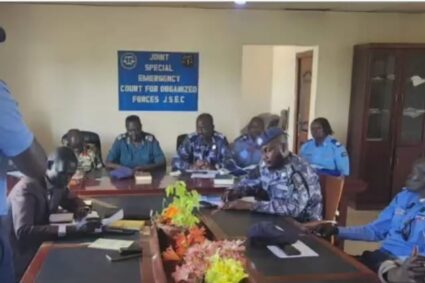
Yakani commended the Ministry of Defence and the Department of Military Justice for efforts to hold perpetrators accountable through military courts, signaling a move toward ending impunity. “We appreciate our Ministry of Defence. Through the military court, they are holding soldiers who have committed sexual violence against civilians accountable. This includes prosecuting those who take advantage of conflict to abuse civilians,” he said.
He concluded by calling on the Chief of Defence Forces of the South Sudan People’s Defence Forces (SSPDF) to ensure that no soldier under their command engages in human rights violations, including sexual violence, under any circumstances.
As South Sudan continues to navigate its fragile peace process, voices like Yakani’s serve as a powerful reminder that the protection of civilians, especially the most vulnerable, must remain a non-negotiable priority for all parties to the conflict.