



Apuk Community unite to rebuild key road: “We have to drive this initiative”

By Aguok Chok
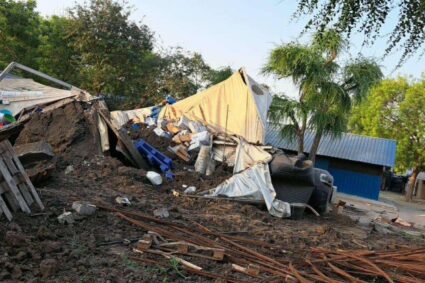
The Apuk community of Gogrial East County convened a meeting in Juba on Saturday, with a sole mission: To build a road that has been badly damaged by heavy rains, becoming a major obstacle to accessing markets, healthcare, and essential services.
The initiative, led by Professor Jok Madut Jok, a respected scholar and native of the Apuk Community brought together elders, Members of Parliament (MPs), and concerned citizens who expressed strong support for a community-led initiative to rehabilitate the road.
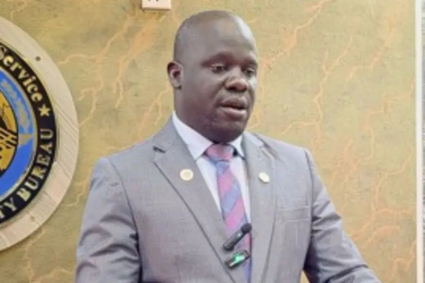
In his remarks, Prof. Jok emphasized on the urgent need for action and the importance of community involvement.
“This road has become a serious obstacle to everything, from market deliveries, to security issues, to trade, to health issues,” he said. “So we said, since it looks like it’s going to take a long time before the government [acts], [we need] our efforts, financial and physical. And hopefully, down the line, the government will catch us.”
He added with resolve, “We cannot just sit as a community and be debilitated by a lack of road infrastructure. We have to do our own initiative, our own efforts.”
The road, which links Luonyaker to Lietnhom, serves as a vital artery for communities in the region, including emergency transportation of patients from Lietnhom to hospitals in Wau and Kuajok. Its deterioration has left entire areas isolated during the rainy season.
Yar Paul Kuol, Chairperson of the Apuk Community in Juba, echoed these concerns.
“It is very crucial. We have a hospital in Lietnhom, and we refer our patients to Wau or Kuajok. And this is only the road that they use. So the road is very important,” she stated.
“We want to start as a community, and also the MPs are playing their roles. The Commissioner is playing their role. We’ll take it up to the state government. But we are just doing our bit because our contribution matters.”
Community members expressed hope that their action will spur support from the government and development partners, but they made it clear they are not waiting.
Mou Ambrose Riiny, Deputy Chairperson of the Apuk Community in Juba, stressed on the strategic and economic importance of the road.
“This road is very important because it is a security road. We know we are connected with neighbouring communities in Mayom County in Unity State. It’s also very important because it’s a means of bringing services to the people, especially when it comes to health provision, because eight months long this headquarters county has been cut off.”
“Health-wise, economic-wise, the road is very important because the products that are even produced and the plants that are done are separate. The one in this area is mostly sorghum, and the cattle are in that area, and in Pathuon are simsim and ground nuts. So actually, we are complementary to this area.”
The Apuk community is now mobilizing funds and resources for the road’s repair, setting a powerful example of grassroots leadership and unity in addressing critical infrastructure needs