

Azande Community promises ‘rich cultural showcase’ at two-day festival in Juba

High ranking community officials say festival aims to preserve Azande traditions and pass cultural values to younger generations while promoting unity and peaceful coexistence among South Sudan’s diverse communities.
By Liam Josh and Samuel Yuang
The Azande community in Western Equatoria State is set to showcase its rich cultural heritage, traditions, customs and history during a two-day cultural festival set to begin from today, November 27- 28, 2026, at Nyakuron Cultural Centre in Juba.
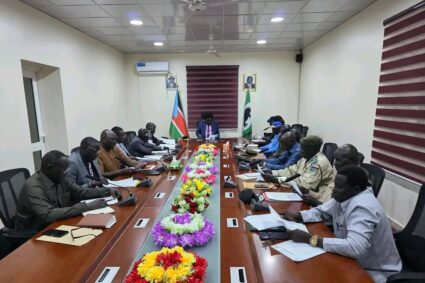
Speaking during a press conference ahead of the event, Pia Philip Michael, Chairperson of the Festival Organising Committee and Undersecretary at the National Ministry of Peacebuilding, said the festival aims to preserve Azande traditions and pass cultural values to younger generations while promoting unity and peaceful coexistence among South Sudan’s diverse communities.
Michael said the festival, organised by the Azande Community Organisation (AKO) in Juba, will provide an opportunity for the Azande people to present their identity, cultural practices and historical contributions to South Sudan.
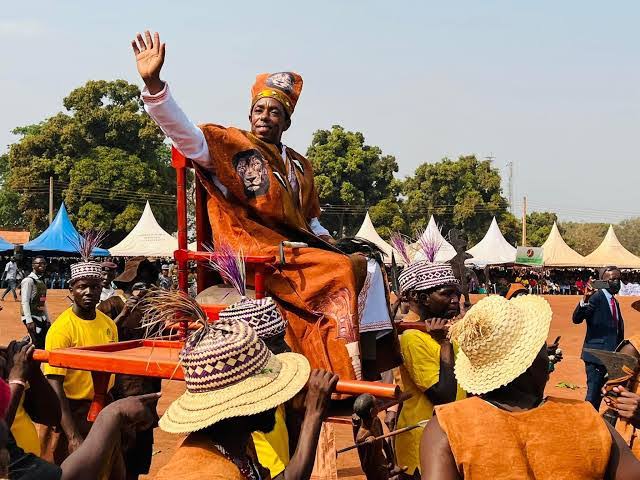
He said the event will be graced by His Majesty King Atoroba Peni Rikito Budwe, whom he described as the recognised king of the Azande people worldwide.
The festival will feature traditional dances, cultural attire, indigenous foods and presentations highlighting the history and customs of the Azande community.
“One of the things we treasure very much is our tradition. We believe that tradition is a way of life that moves from one generation to another,” Michael said.
He emphasised that cultural preservation requires more than teaching children at home, adding that bringing communities together through cultural events provides a practical opportunity for young people to learn and appreciate their heritage.
Michael highlighted respect for elders, peace, social cohesion, care for children and women, and food production as some of the core values of the Azande people.
He also explained that traditional greetings and other cultural practices reflect the community’s emphasis on respect, particularly towards elders.
On the historical contributions of the Azande people, Michael pointed to the development of the industrial centre in Nzara, Western Equatoria State, where the British established a factory that became associated with cotton production and other economic activities.
He said the historical experiences of the Azande people, including their involvement in agricultural production and early industrial development, are important aspects of their heritage that should be passed on to future generations.
Michael further explained that the Azande traditional administration was historically organised under a hierarchical system headed by the king. However, he acknowledged that some traditional practices have evolved to reflect contemporary values and the needs of the 21st century.
He said the community is committed to preserving positive cultural values while reviewing practices that may no longer be appropriate.
Addressing the importance of holding the festival in Juba, Michael said the decision was intended to reach Azande families and children living in the capital who may not have the opportunity to travel to Yambio for traditional celebrations.
He noted that the community traditionally celebrates its cultural day on February 9 in Yambio, while Azande people living in different parts of the world also organise cultural celebrations.
According to Michael, the Juba festival will also help address misconceptions and stereotypes about the Azande community, particularly among people who have had limited opportunities to interact with them.
He said some Azande children and young people have been wrongly identified as foreigners because of their appearance, language or educational backgrounds.
“We don’t blame the people of South Sudan because we are a big country. If you were born in the extreme north and have not travelled to the western part of South Sudan, you may be seeing the Azande for the first time,” he said.
Michael stressed that the Azande people are an integral part of South Sudan and that the festival will provide an opportunity for the country’s 64 recognised ethnic communities to learn about one another.
He added that cultural festivals play an important role in bringing different communities together, reducing tribal stereotypes, strengthening relationships among young people and promoting national identity.
On the financial arrangements, Michael disclosed that the organising committee initially estimated a budget of approximately $130,000, but said preparations have largely depended on contributions from members of the Azande community, well-wishers and supporters.
He explained that contributions have included financial assistance and in-kind donations such as water and charcoal.
Responding to concerns about marriage practices and high dowry demands, Michael said the Azande Kingdom has introduced guidelines aimed at regulating traditional marriage practices and discouraging excessive demands.
He emphasised that marriage in Azande culture should be based on mutual consent, respect and the relationship between two families rather than financial gain.
He further stated that a woman’s consent is essential in marriage and that no girl should be forced into a marriage against her wishes.
Michael said the community does not consider women as commodities to be exchanged for wealth, adding that traditional marriage payments should serve as a symbol of appreciation and unity between families.
On peace and security in Western Equatoria State, he said the state had historically enjoyed relative stability but experienced political conflicts following the crises of 2013 and 2016.
He maintained that the tensions should not be viewed as purely tribal conflicts, arguing that political interests have contributed to divisions among communities.
Michael said dialogue, peaceful coexistence and engagement among different ethnic groups remain important approaches to addressing challenges in the state.
He added that the Azande community continues to promote peaceful relations with other ethnic groups, including through representation of people from different communities in the traditional leadership structure.
The organising committee has invited all South Sudanese communities, cultural groups, media houses and members of the public to attend the festival on November 27 and 28 at Nyakuron Cultural Centre.
The event is expected to provide a platform for cultural exchange, heritage preservation and strengthened national unity.
Utilities
“One of the things we treasure very much is our tradition. We believe that tradition is a way of life that moves from one generation to another,” Pia Philip Michael, Chairperson of the Festival Organising Committee and Undersecretary at the National Ministry of Peacebuilding, said.