

Cleto urges Govt. to consider health a ‘national security’ matter

Several rights health activists have been calling on the government to increase the annual budget allocation for the health sector to 15 % in line with the Abuja Declaration.
By Aguok Chok
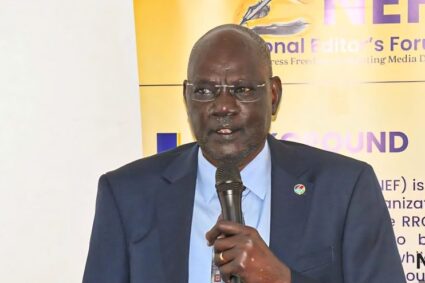
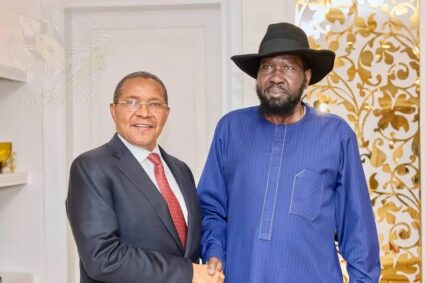
The Minister of Health, Hon. Sarah Cleto, has appealed to President Salva Kiir to consider the issues of health affecting the country as “national security.”
Cleto raised concerns during her briefing to the president on the current health situation in the country.
“Health is a matter of national security,” she told the President, calling on the government to take the lead in mobilizing investment in healthcare.
The Minister stated that a resilient and accessible health system is essential not only to protecting lives but also to support national development.
On his side, President Kiir expressed firm determination to work closely with the Ministry of Health to ensure the country achieves better outcomes in the sector. “I will provide my full support toward efforts aimed at upgrading healthcare and services across the nation,” President Kiir assured the Minister.
The statement comes at a critical time when South Sudan has been facing recurring challenges in the health sector, including the recent cholera outbreak and low allocation of budget to the health sector.
Several rights health activists have been calling on the government to increase the annual budget allocation for the health sector to 15 % in line with the Abuja Declaration.
The activists have always urged the importance of adhering to the Abuja Declaration, a 2001 commitment by African Union countries to allocate at least 15% of their annual budgets to health.
They said the paltry 2% allocation is insufficient to provide quality health services to the citizens.
Threats to healthcare
On Wednesday, authorities in the Greater Pibor Administrative Area raised concerns about the medical stock shortage as Med Air declared withdrawal of support from the area.
Med Air, a non-governmental organization that has been solely supporting health facilities in Gumuruk and Lekuangole Counties, said it is ending its support this month.
In an exclusive interview with The City Review yesterday, Dr. John Baba Lothiko, Director General Ministry of Health and Environment in the Greater Pibor Administrative Area, warned that a new development poses a serious threat to the communities.
The Gumuruk and Lekuangole facilities have been relying 100% on funding from Med Air, without any government funds, which means the facilities are facing imminent challenges.
The administration said this development poses a serious risk to the continuity of services in communities that are already vulnerable and heavily reliant on these facilities for maternal and child health services, treatment of common illnesses, and emergency care.
“If this issue is not addressed, the organization’s withdrawal could lead to severe public health consequences, including increased morbidity and mortality rates,” Baba stated in a letter of request.
“In light of this, I am raising this concern to all health sector partners for urgent consideration. We respectfully request partners to explore ways to support the Primary Health Care Centers in Lekuangole and Gumuruk, to ensure service continuity and prevent the complete collapse of the local health system in these counties,” Baba stated.
On the other hand, healthcare workers in medical charities like Doctors without Borders (MSF), have increasingly raised concerns over frequent targeted attacks on its staff.
Early this month, in August 5, MSF suspended all operational activities in Yei River and Morobo counties in Central Equatoria State, for a minimum of six weeks following the abduction of its staff member.
According to the organization, the abduction occurred just four days after the abduction of a staff member from the Ministry of Health from an MSF ambulance on the same road and location.
“We are outraged by this targeted attack. Attacks on humanitarian workers serving the most vulnerable members of the society must stop,” says Dr Ferdinand Atte, MSF head of mission in South Sudan. “While we are deeply committed to providing care to those in need, we cannot keep our staff working in an unsafe environment.”
Earlier, in June, MSF closed its hospital in Ulang County following two violent incidents, effectively ending support to its 13 community-based health facilities in the area.
“This has left 150,000 people with less access to healthcare, in an area where MSF’s maternal services are a lifeline,” MSF said in a statement.