





Dangote’s multibillion-dollar refinery poised to transform EAC, South Sudan

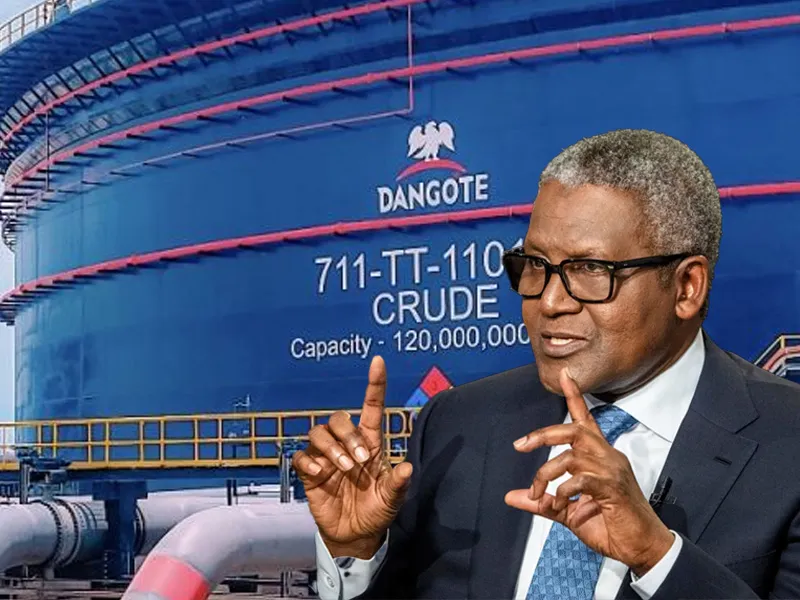
Nigerian billionaire energy mogul sets eyes on Mombasa to set up a $17billion regional refinery that will transform region, including South Sudan, East Africa’s largest oil producer
By Clive Olero
A new dawn is beckoning in East Africa. Africa’s leading industrialist and richest man, Nigeria’s Aliko Dangote, is dangling a mega petroleum-processing facility to regional heads of state, a highly ambitious investment that could become the region’s most transformative project.
If established, the $17 billion regional refinery with a capacity of 650,000 barrels per day will not only transform East Africa’s economic standing but also eliminate the region’s agelong reliance on refined oil imports from the Middle East and Europe.
The good news is that regional heads, including Kenya’s President William Ruto, Uganda’s Yoweri Museveni and Tanzania’s Suluhu Hassan, have already given the project the green light, suggesting it could only be a matter of time.
While initial discussions seemed to favour its establishment in Tanga, recent reports show that Dangote is angling towards Mombasa, citing the port’s expansive capacity and Kenya’s stronger economy and higher consumption.
“I’m leaning more towards Mombasa because Mombasa has a much larger, deeper port… Kenyans consume more. It’s a bigger economy,” Dangote told the Financial Times.
In the last three months, the global energy ecosystem has faced major shocks that have occasioned unimaginable hikes in oil prices. The running explanation has blamed it on Tehran’s closure of the Strait of Hormuz, but critics fault government taxes, cartel-controlled oil markets and sheer bad manners by powerful political leaders and business moguls.
The Strait of Hormuz is one of the most important chokepoints in the world. Controlling 20% of the global oil supply, the Strait plays a key role in sustaining the global energy system. East Africa remains largely dependent on the Strait’s uninterrupted operations because a significant volume of refined oil imported to its market passes through the Strait of Hormuz.
This reality exemplifies the grand paradox of Africa’s energy market: That while Africa produces an estimated 12% of the world’s crude oil, many African countries depend almost entirely on imported oil products.
A report by UNEP estimates that Africa holds about 30% of the world’s mineral reserves and 8% of the world’s natural gas. The continent is also the biggest producer of gold, chromium, platinum, diamonds, uranium and cobalt. Yet, it remains the poorest region in the world.
Within the East African region, South Sudan is the leading oil producer with an estimated 3.8 billion barrels of proven oil reserves. The country is also among the biggest oil producers in Africa alongside Nigeria, Algeria, Libya, Angola and Egypt.
Other notable oil producers in the region include Uganda, with an estimated 6.5 billion barrels of crude oil reserves and the Democratic Republic of Congo, with 180 million barrels. Kenya’s oil exploration efforts have established nearly 50 petroleum blocks, with the country’s Ministry of Energy and Petroleum confirming that the South Lokichar holds about 2.9 billion barrels of crude oil.
Collectively, East Africa’s proven oil reserves can sustain the region’s consumption. The downside is that nearly all this oil is first exported in crude form to the Middle East before being imported as refined oil. The rest of the crude oil remains either unextracted or unexplored.
Understanding this contradiction does not require rocket science. The tragedy with Africa is that we have everything the world needs, but we lack the industrial capacity, capital and technology to refine or manufacture our raw materials. If there were a trophy for the richest yet poorest region in the world, Africa would win it hands down.
But Africa’s aspiration is not about winning absurd titles. Africa will take its rightful place by building strong industrial capacity to transform our raw materials into finished products. The proposed multibillion-dollar refinery will be significant in making that dream a reality, ensuring that African crude oil is refined locally and cushioning the regional energy market from global shocks.
As a regional strategic asset for EAC member states, the project can make a tremendous economic, geopolitical and diplomatic impact, creating a common petroleum products market and strengthening regional integration and trade. This would significantly reduce EAC’s reliance on imported petroleum products and boost its bargaining power, effectively altering the region’s collective foreign policy.

Dangote refinery in Nigeria.[Photo: Courtesy]
Dr Gordon Ogutu, an expert in International Relations, Development and Migration Governance and a Research Fellow at Dublin City University, is confident that the refining plant would enable the region to engage the Middle East on broader strategic issues, creating an equal, economically and diplomatically healthy relationship.
“The refinery will strengthen diplomatic relations between the two regions. Countries like the UAE, which have shown renewed interest in the region, will seek to consolidate their influence as part of broader geopolitical ambitions. The complexities of regional and global politics associated with oil will force the regions to engage more on a diplomatic level,” he said.
Besides regional fortunes, the facility’s impact on South Sudan’s economy and diplomatic standing in the region is of critical interest, given its stake as a leading producer.
Dr Ogutu believes the refinery will be a major paradigm shift in South Sudan’s petroleum supply chain.
“It will give South Sudan an alternative export route and destination different from Sudan, which is fragile and experiencing protracted challenges. This is an opportunity to put to the test the LAPPSET corridor, which provides an alternative to the sea through the Lamu Port,” he said.
While the investment promises enhanced regional position and economic autonomy, others believe it could lead to adverse diplomatic dynamics and economic competition. Leading exporters such as the UAE, Saudi Arabia, Kuwait and Oman have invested heavily in mega refineries, storage facilities, and transport infrastructure to facilitate an uninterrupted global supply of petroleum products.
The project could balance the equation, transforming the region from import-reliant to a major exporter and effectively posing a mix of threats and opportunities to the existing trade dynamics. As a result, the East African region could capture a significant share of the Middle East petroleum market, reducing exports to and influence on the region.
Africa’s petroleum demand is estimated at 4.5 billion barrels, with the East African region alone consuming between 350,000 and 500,000 barrels per day. With a proposed capacity of 650,000 barrels per day, the proposed processing plant could comfortably meet the region’s oil demands and still have some extra for export, particularly within the continent.
This improved refining capacity would shift Africa’s dependence on raw materials, positioning the continent as a significant exporter of refined petroleum products and boosting intra-African trade.
Optimising the oil value chain and promoting the EAC integration with the continent-wide African Continental Free Trade Area (AfCFTA) and the Common Market for Eastern and Southern Africa (COMESA) are key objectives of this vision.
Beyond this, the revolutionary investment would contribute to broader socio-economic transformation, the harmonisation of oil policy frameworks and standards and the expansion of pipeline and transport infrastructure, including storage facilities and major regional transport networks.
A similar Dangote refinery, which started operations in 2024 in Nigeria, has already shifted Africa’s oil dynamics and economy. The $20 billion establishment produces 700,000 barrels per day, with plans underway to expand capacity to 1.4 million barrels per day in the next 30 months. It has become a major supplier of petroleum products to African countries, Europe and the United States of America, with exports reaching 353,000 barrels per day in April.
Additionally, the world’s largest single-train refinery has provided job opportunities and developed the technical skills of many. The plant’s website projects that the facility will employ over 100,000 people when it is fully operational and train over 1,300 young artisans and engineers. This is remarkable in a continent with the highest unemployment and underemployment.
Although East Africa’s refinery will be inferior to Nigeria’s, it is expected to create job opportunities, expand pipeline and transport infrastructure, boost the region’s collective economic and diplomatic leverage and promote intra-African trade and integration.
The onus is now on regional heads of state to harmonise their sovereign, economic and political priorities and take advantage of this opportunity to construct one of the region’s most ambitious infrastructure projects. This is East Africa’s ultimate date with destiny.
Utilities
Africa’s petroleum demand is estimated at 4.5 billion barrels, with the East African region alone consuming between 350,000 and 500,000 barrels per day. With a proposed capacity of 650,000 barrels per day, the proposed processing plant could comfortably meet the region’s oil demands.