

“Don’t Drop South Sudan from Your Agenda,” Yakani tells UN Security Council

By Emmanuel Mandella
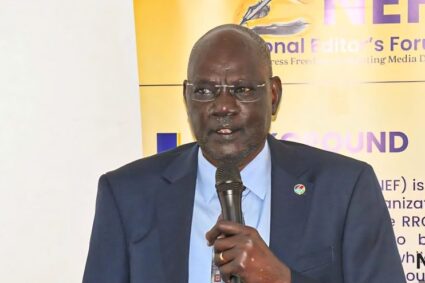
As the United Nations Security Council (UNSC) convenes today for its regular briefing on South Sudan, civil society leader Edmond Yakani appealed to the body not to sideline the world’s youngest nation at a time of deepening political and humanitarian situation.
Yakani, the Executive Director of the Community Empowerment for Progress Organization (CEPO), speaking on behalf of what he described as “the suffering citizens of South Sudan,” called on the Council to support recent proposals by the African Union (AU) Peace and Security Council delegation.
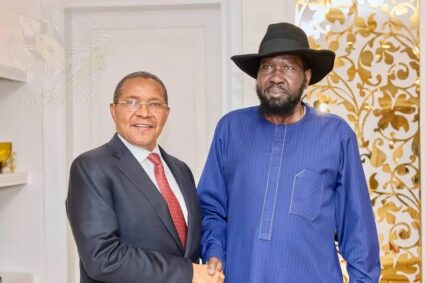
The AU has suggested the appointment of a former African head of state as AU High Representative to South Sudan to help bridge the trust deficit among political rivals a trust deficit that Yakani warned has fueled instability since the country descended into civil war in December 2013.
“Don’t leave South Sudan behind. Don’t forget South Sudan. Don’t drop South Sudan from your agenda,” Yakani pleaded. “Peace, stability, and the protection of civilians must remain a priority for the members of the UN Security Council.”
The UNSC has previously called for renewed political commitment to the Revitalized Agreement on the Resolution of the Conflict in South Sudan (R-ARCSS).
The peace deal was hailed as a historic opportunity to end years of bloodshed, promising power-sharing, security arrangements, and ultimately democratic elections.
But six years on, implementation has been sluggish and incomplete, critical benchmarks such as the unification of forces, judicial reforms, and constitution-making are yet to be accomplished.
Yakani also stressed the importance of reviving the Tumaini Initiative a peace process launched by Kenya to bring together the government and holdout opposition groups. The initiative was seen as a crucial avenue for inclusivity, expanding the political space beyond the 2018 agreement.
Meanwhile, the Nairobi-led peace process, the Tumaini Initiative, is also yet to be concluded.
According to Sabeko John, a local political analyst based in Yambio, the suspension of Tumaini peace talks is “a dangerous gamble.”
“Without inclusivity, the peace process risks collapsing under its own weight. You cannot build stability on partial agreements. Kenya’s mediation remains vital if South Sudan is to find a durable settlement,” he told The City Review.
For many South Sudanese, the appeals in international platforms are stretched away from the realities faced by citizens on ground.
“We are tired of promises. Every day we live in fear of hunger and violence, if the country continues in conflict and the world forgets us, what future do our children have?”
“Elections in 2026 could be a turning point if done right, but if reforms are not implemented, the vote may only spark new conflict. We want real peace, not just words on paper,” said Undore Emmanuel, a university student in Yambio.
Observers warn that South Sudan risks joining a long list of African crises where international focus has gradually faded.
Yakani urged the UNSC to push for a joint statement by the UN Secretary-General, AU Commission Chairperson, and IGAD Executive Secretary, signaling renewed international resolve.
South Sudan is scheduled to hold elections in December 2026, the first since independence in 2011. Yet with political tensions simmering, humanitarian needs soaring, and key peace protocols unmet, many question viability of credible polls.
Analysts argue that the next two years will be decisive. If the AU, UN, and IGAD can forge stronger trilateral cooperation as Yakani suggests it could inject fresh momentum into the stalled peace process.
But for ordinary citizens, the stakes remain high. After more than a decade of independence, South Sudan stands at a crossroads. Will the long-awaited elections deliver lasting peace?