

EU to S. Sudan: Choose peace over bombs or risk slipping back to war

Deputy Head of the EU Delegation to South Sudan described the renewed fighting as “the most dangerous” since the signing of the Revitalized Peace Agreement.
By Emmanuel Mandella
In a stern and urgent appeal to South Sudan’s leadership, the European Union (EU) has condemned the escalating violence in the country, warning that continued military offensives threaten to undo years of fragile progress under the 2018 peace agreement.
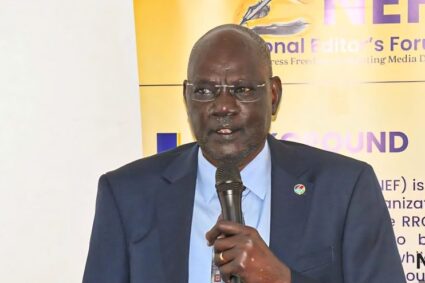
Speaking at the launch of the Annual Gender Equality Forum in Juba on Tuesday, Lothar Jaschke, Deputy Head of the EU Delegation to South Sudan, described the renewed fighting as “the most dangerous” since the signing of the Revitalized Peace Agreement.
“We are witnessing an escalation of armed clashes not seen since 2018,” Jaschke said. “Barrel bombings, attacks on health centres, and widespread violence are not only undermining the peace agreement but crushing the hopes of millions who deserve a peaceful future.”
Although the Gender Equality Forum, running from June 17 to 19, primarily focuses on women’s inclusion in governance, Jaschke used the platform to highlight the EU’s growing concerns over peace and security in South Sudan.
Joining the African Union and IGAD in their call for an immediate ceasefire, the EU further demanded the release of political prisoners and the urgent resumption of dialogue among peace agreement signatories.
“We must prevent a relapse into full-scale war at all costs. The peace agreement must not remain mere ink on paper. South Sudan needs decisive action, not hollow promises,” he said.
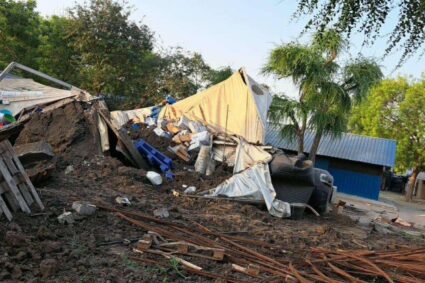
His remarks come as fighting intensifies in Unity and Upper Nile States, where thousands have been displaced and humanitarian operations severely disrupted. According to the United Nations Office for the Coordination of Humanitarian Affairs (OCHA), aerial bombardments have destroyed several health facilities, leaving vulnerable populations without access to basic medical care.
“This war is costing the country far more than infrastructure. It is tearing apart the social fabric,” said civil society activist Gloria Juma. “The EU is right—our leaders must put the guns down and prioritize the people.”
Jaschke called on the government to “invest in peace, not weapons,” emphasizing that the country’s future depends on the choices made now. “South Sudan needs agriculture and investment, not arms. It needs more women in politics, more women in security, and more women shaping the future,” he said.
He closed his address with a powerful message: “I am fully and strongly convinced that the world would look much better—and be far more peaceful—if more women held leadership positions.”
The EU’s message, echoed by other regional and international partners, is clear: peace and stability must be the government’s top priorities. The violence must cease, and dialogue must resume if South Sudan is to get back on track.
As the country prepares for its first democratic elections, growing political instability, delays in implementing the transitional process, and the resurgence of armed conflict pose serious threats to the peace roadmap.