




EZO RRC coordinator dismisses allegations of favouritism on aid distribution

The statement comes in response to public complaints made earlier this month by a county surveillance officer, who accused the body of discriminatory aid distribution
By Emmanuel Mandella
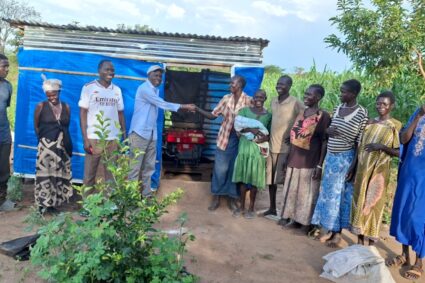
An official from the Relief and Rehabilitation Commission (RRC) in Ezo County has dismissed allegations accusing the organization of sidelining Internally Displaced Persons (IDPs) in favor of the host community during aid distribution.
Siani Martin, RRC Coordinator in the County strongly denied the claims, calling them “false allegations orchestrated by spoilers of peace.”
Thousands of IDPs, who fled violence and insecurity in neighboring Tombura County and sought refuge in Ezo, now face dire humanitarian conditions from low access to clean water, healthcare, food, and essential non-food items.
In an exclusive interview with The City Review, Mr. Siani clarified that aid support is strictly registered and designated for IDPs, with only a small percentage typically between 5 to 15 percent allocated to the host community, as is standard practice across the country.
“We don’t register the host community; we register IDPs,” Siani emphasized. “The host community’s portion is channeled through their local authorities like chiefs and headmen who know how to handle it. When that small portion is not enough, some start spreading misinformation.”
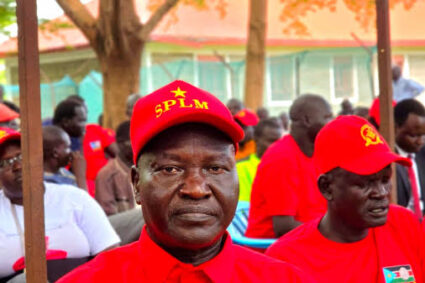
The statement comes in response to public complaints made earlier this month by Dr. Abraham Danadiri, a county surveillance officer and headman for Hai Network area in Ezo, during the funeral of youth leader Isaac Miskin. Danadiri accused the authorities of discriminatory aid distribution.
“Registration was done in my area, but until now, nothing has reached my people,” he said. “Support must be distributed equally not favoring some while leaving others behind.”
However, Sultan Ture, the Paramount Chief of Ezo County, dismissed the criticism, affirming that the recipients were verified IDPs, not members of the host community. He urged locals to shift focus towards farming rather than depending solely on aid.
The tension in Ezo is not isolated. Similar incidents have been reported in parts of Unity, Upper Nile, and Jonglei States where host communities have clashed with humanitarian workers over perceptions of aid exclusion. Humanitarian organizations have often had to clarify their mandate of prioritizing the most vulnerable typically displaced individuals while balancing community cohesion.
According to the South Sudan Humanitarian Needs Overview (2024), over 2.2 million people remain displaced internally, with many depending on aid to survive. Host communities, already strained by economic hardship and conflict, often feel overlooked, and fueling frustrations.
In Ezo County alone, Siani says IDP settlements now exist in the central town and in Naandi, Bariguna, Yangiri, and Andari Payams. With resources stretched thin, local leaders are calling for increased humanitarian presence and more inclusive community engagement to manage expectations and avoid misinformation.
As humanitarian needs escalate due to inter-communal tensions, the need for transparency, clear communication, and fairness in aid distribution has never been more critical. The RRC and traditional authorities in Ezo have a tough balancing act ahead to ensure IDPs are cared for while preserving harmony with their generous yet frustrated hosts.