





First Mpox related death reported in Yambio as hospitals struggle to contain virus

By Emmanuel Mandella
Western Equatoria State has recorded its first Mpox-related death, raising fears over the state’s preparedness to respond to the outbreak, with health officials warning that Yambio State Hospital is coming under increasing pressure from suspected and confirmed cases.
The State Minister of Health, James Abdullai Arona, confirmed on Tuesday that a patient who had tested positive for Mpox died at Yambio State Hospital, marking the first fatality linked to the viral disease in the state.
“I received laboratory results confirming three positive Mpox cases in Ezo County and one case admitted at Yambio State Hospital, unfortunately, the patient at the state hospital passed away, and the test result also came back positive, meaning the death was due to Mpox,” Arona told journalists.
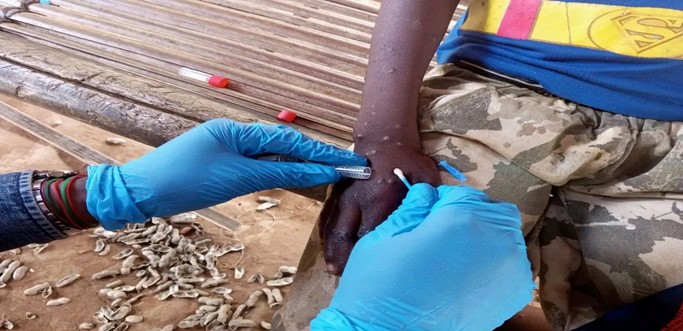
According to the Ministry of Health, Western Equatoria State has now confirmed four Mpox cases, including the deceased patient. Health officials say more suspected cases are being monitored as surveillance teams intensify contact tracing.
The confirmation of the first death has increased pressure on Yambio State Hospital, the state’s main referral facility, which is now at the center of the Mpox response.
Medical staff, speaking on condition of anonymity, told The City Review that the hospital is grappling with limited isolation space, shortages of protective equipment, and understaffing, raising concerns about the risk of transmission to health workers and other patients.
“We are trying our best, but this hospital was not designed for outbreaks of this nature. Isolation rooms are limited, and Mpox requires strict prevention measures,” said one senior health worker.
Earlier this week, The City Review reported that health authorities in Western Equatoria had raised alarm over the disease’s outbreak, particularly in border counties such as Ezo, where movement across the borders with the Democratic Republic of Congo (DRC) and the Central African Republic (CAR) is frequent.
That report highlighted concerns from health officials that cross-border population movement, combined with weak surveillance at entry points, could accelerate the spread of the disease.
As previously reported by The City Review, Mpox samples from Western Equatoria are still being sent to Juba for laboratory confirmation, a process that health experts say causes delays in diagnosis and response.
“The challenge we are facing is the turnaround time for lab results, samples must be transported to Juba, and that slows down confirmation and timely isolation,” Minister Arona acknowledged.
Health experts warn that such delays could worsen the situation, especially for a virus like Mpox, which spreads through close skin-to-skin contact, shared bedding, clothing, and prolonged physical interaction.
The death has sparked fear and anxiety among residents of Yambio and surrounding counties, with some community members expressing concern over the hospital’s ability to cope.
“We are scared because if the main hospital is overwhelmed, where will people go? People are already avoiding hospitals because they fear infection” said a resident of Hai Tarawa in Yambio town.
Also a market vendors and transport operators interviewed by The City Review said misinformation is spreading rapidly, with some residents wrongly believing Mpox is always fatal.
Health officials have urged calm, stressing that early detection and medical care significantly reduce complications.
“Mpox is preventable and manageable if reported early, the problem is when patients delay seeking medical attention,” Arona said.
In its earlier reporting, The City Review noted that health authorities had warned of a potential Mpox outbreak weeks ago, and called for increased funding, community awareness, and support from national authorities and development partners.
At the time, officials cited limited funding, overstretched health workers, and fragile infrastructure as major obstacles to preparedness.
“The outbreak we are seeing now did not come as a surprise, we flagged the risk earlier, but the response was slow,” said a public health officer in Yambio.
The state Ministry of Health has now renewed calls for urgent intervention from the national government and partners, including the provision of testing kits, protective equipment, and emergency funds to strengthen Yambio State Hospital and peripheral health facilities.