

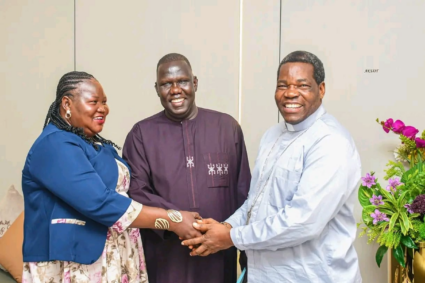
HIV/AIDS Commission seeks USD 300 million for 3-year strategy plan

This follows the U.S government decision to shut down USAID operations, a move that has negatively impacted the people leaving with HIV in South Sudan and the globe as a whole
By Philip Basa
The Chairperson of South Sudan HIV/AIDS Commission, Dr. Esterina Keyontes, said the commission is seeking USD 300 million for its three-year strategy plan.
She appealed to the government of South Sudan to step up in supporting HIV/AIDS after President Donald Trump froze foreign aid.
Esterina said the decision by the U.S government to shut down USAID operation overnight has negatively impacted the people leaving with HIV in South Sudan and the globe as a whole.
However, she said no country can depend on donors and urged the government of South Sudan to step up.
“The South Sudan government has the primary responsibility to take care of its own citizens and the priority to health is very important,” Esterina stated.
“We can’t depend on donors yet we have a country. That is the reason we call for urgent intervention to reach all the persons who are living with HIV in South Sudan. No country can develop with donated money.”
The U.S government decision is said to have interrupted essential health service delivery in all facilities run by PEPFAR implementers in South Sudan.
She noted that programs for HIV/AIDS, tuberculosis, malaria, maternal and child healthcare are now suffering as the operations were now suspended in some of the facilities.
The few States affected include Central Equatoria State, Western Equatoria State, and Eastern Equatoria State.
However, Esterina urged the government to strengthen the country’s ownership of the HIV response and minimize dependence on external donors.
“The political and the leadership should be committed especially at the lower government structure to prioritize HIV response in the country.”
She said that the limited resource mobilization is one of the major factors affecting the aid response in South Sudan.
The commission said currently South Sudan does not have a specific policy or strategy in place to recommend on how HIV/AIDS can be financed.
Peter Garang, a civil society activist, said the government has done little in support of the people living with HIV/AIDS.
According to Garang, there are many South Sudanese who still don’t believe in HIV/AIDS. He said there is need for more awareness among the community at the grassroots level.
“The political and the leadership should be committed especially at the lower government structure to prioritize HIV response in the country,” Chairperson of South Sudan HIV/AIDS Commission, Dr. Esterina Keyontes said.