

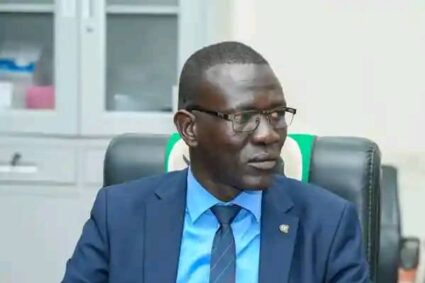
Hon. Kuol Manyang urges citizens to embrace agriculture to bolster economy

He was among the SPLM delegates who accompanied the newly sworn-in Deputy Governor of Western Equatoria State, Daniel Badagbu to Yambio on Thursday
By Emmanuel Mandela
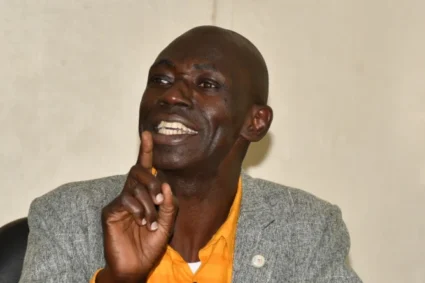
The Senior Presidential Advisor, Kuol Manyang Juuk has called on the citizens across the country to embrace agriculture as a potential driving force in the recovery of the country’s economy.
Addressing a rally at Yambio Freedom Square, Juuk highlighted agriculture as a foundational pillar for South Sudan’s future prosperity.
He was among the SPLM delegates who accompanied the newly sworn-in Deputy Governor of Western Equatoria State, Daniel Badagbu to Yambio on Thursday.
“Agriculture is not just a sector; it is the heartbeat of our survival and growth. It is time for every South Sudanese to see farming not merely as an option but as an obligation for our nation’s progress,” said Juuk.
Western Equatoria State often regarded as the breadbasket of South Sudan, boasts some of the most fertile soils in the region.
This area is characterized by nutrient-rich, loamy soils that are ideal for a variety of crops, including cassava, maize, sorghum, and groundnuts. Its tropical climate, abundant rainfall, and vast tracts of arable land provide an unparalleled opportunity for large-scale agricultural activities that can stimulate the local economy and contribute significantly to the country’s GDP.
Juuk continued that investing in agriculture would not only meet domestic food needs but also create a robust platform for export opportunities. “Our fertile land is a gift we must harness. By cultivating these fields, we are sowing the seeds of prosperity that can nourish not just Western Equatoria but the whole of South Sudan and beyond,” he added.
The push for agricultural development comes at a critical time when South Sudan is seeking pathways to rebuild its economy after years of conflict and instability.
Agriculture, which is said to engage over 80% of the population in subsistence farming if taken seriously, has the potential to transition into a commercial force capable of generating employment, reducing poverty, and ensuring food security.
If supported through coordinated efforts between the government, private sector, and international partners, Western Equatoria could spearhead a nationwide agricultural renaissance. Infrastructure investments such as roads and market facilities, combined with training programs for farmers and subsidies for seeds and equipment, could unleash the untapped potential of the state’s fertile lands.
“By focusing on agriculture, we are building a legacy of self-reliance and resilience,” Juuk continued.
Daniel Badagbu, the Deputy Governor of Western Equatoria State expressed his commitment to aligning with this vision and implementing policies that would stimulate agricultural growth.
“We have the land, we have the people; now we need the will to work together and make it happen,” Badagbu said in his first address, signaling a strong partnership between state leadership and communities.
In a separate interview with The City Review, a local farmer in Yambio, Tambua Thomas said, “Hearing our leaders prioritize agriculture gives us hope. If we are given the support we need, we can grow enough not just for our families but for markets far beyond Western Equatoria.”
The Senior Presidential Advisor’s renewed focus on agricultural initiatives come with a promise and a challenge. It is a call to action for policymakers to implement sustainable practices, improve access to farming resources, and ensure the infrastructure projects to support the agricultural sector’s growth are put in place.
“The future of South Sudan is in our hands and our hands must be in the fields,” Juuk.