



Lack of liquidity is tied to systematic weaknesses, says economist

Dr. Abraham Maliet blames shortage of cash at the Central Bank of South Sudan to deep-rooted microeconomic challenges, prescribing measures that could stimulate sector
By Aguok Chok
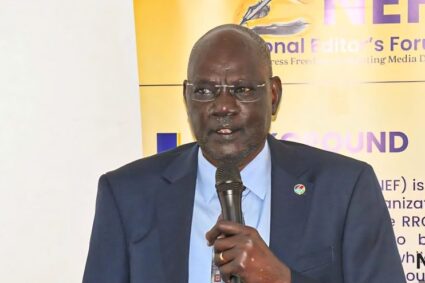
The ongoing liquidity crisis in the country is caused by deep-rooted micro-economic challenges, said Dr. Abraham Maliet, a renowned economist, in an interview with The City Review on Thursday.
“When you don’t have cash, that’s no suppression, it’s simple: When there is no escalation, there is no activities, and when there are no activities, no money generated. It is a linear equation,” he said, adding that limited cash flow results in reduced economic activity and overall stagnation.
He identified multiple microeconomic causes behind the crisis. “You can never pin it down to one thing,” he noted, citing low productivity, poor banking habits, and lack of trust in financial institutions. “If there is no products that are sold to the market, then there is no cash that will come,” he explained. Even government agencies were failing to bank revenue, disrupting cash circulation, he added.
A major concern raised by Dr. Maliet is the absence of incentives for individuals and businesses to trust banks. “If I’m not getting a benefit from my money being in the bank, then I will not put my money there,” he said, urging banks to develop attractive products for clients and make at least 50% of deposits available for withdrawals.
The economist recommended both short and long-term strategies focused on increasing productivity, enhancing trust in commercial banks, and promoting digital payments. “The government should pay people using the digital platform,” he stated. However, he cautioned that digitization must match South Sudan’s realities, considering that 90% of the public is not part of the formal economy.
“We should strive to ensure we include more people into the formal economic cycles,” he said.
Dr. Maliet also called for regulation and public awareness around mobile money platforms. “There should be a conversation, education, and public awareness. There must be proper regulation in the market as well,” he said.
On the issue of corruption within the Central Bank, he acknowledged ongoing malpractices, pointing to an earlier assertion by the newly appointed leadership at the banking regulator, that staff at the institution as for 10 percent kickbacks. He said these kinds of bribes allegedly solicited when processing financial obligations is affecting development. He attributed this to poor administrative oversight, pressure from economic hardship, and a culture of favoritism. “These guys, they feel that they have been given an advantage over the others,” he said.
To tackle this, Dr. Maliet urged the Central Bank’s new leadership to address staff welfare and instill ethical conduct. “The bank should give small incentives to their staff so that they behave well,” he said, adding that training on ethics and proper monitoring could gradually reduce corruption.
Additionally, Dr. Maliet drew a clear line between roles in the country’s financial sector: “Minister of Finance, go look for money. The Bank of South Sudan, keep the money safe.”
He called on the Ministry of Finance to actively seek international financing, tapping into South Sudan’s rich resources. “We’ve got a lot of resources here that needs to be really, really tapped into and promoted,” he said. “It is the role of the Minister of Finance to look for money.”
“We should strive to ensure we include more people into the formal economic cycles,” Dr. Abraham Maliet, an economist.