




Minister calls for transparent revenue management in WES

The event was attended by commissioners from all the ten counties, executive directors, and director general from all ministries, members of parliament, civil society representatives, and cabinet ministers.
By Emmanuel Mandella
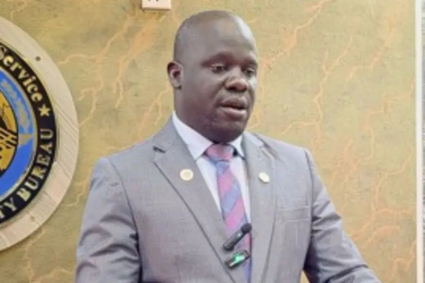
Western Equatoria State Minister of Finance, Planning, and Investment, Hon. Bazia Tito Morris, has called on government leaders to embrace responsible revenue management and strengthen inter-institutional collaboration to improve service delivery across the state.
Speaking during the opening of a three-day high-level capacity-building workshop in Yambio, Minister Bazia underscored the urgency of financial accountability and strategic partnerships in driving sustainable development.
“This workshop is particularly important because it directly speaks to how we manage our sources of revenue,” said Bazia. “Generating and using revenue responsibly is not only essential for sustaining government programs but also for advancing broader state development goals.”
The workshop—held under the theme “Strengthening Effective Revenue Collection to Improve Service Delivery in the State”—was organized by the State Ministry of Finance with support from the United Nations Development Programme (UNDP). The event brought together commissioners from all ten counties, executive directors, director generals, members of parliament, civil society representatives, and cabinet ministers.
Acknowledging the growing demand for effective revenue utilization, Bazia thanked both UNDP and the state government for their support. “This training is timely. Our institutions are under increasing pressure to demonstrate transparency, accountability, and real value for public funds,” he said. “I sincerely appreciate all those who made it possible for our staff—and by extension, their families—to benefit from this workshop.”
The Minister also pointed to challenges in engaging with national institutions, attributing delays not to unwillingness but to bureaucratic hurdles and outdated regulatory frameworks.
“Often, we are slowed not by lack of commitment, but by rigid systems that need to be reviewed and reformed,” he noted.
Encouraging a cultural shift in how public revenue is collected and managed, Bazia urged participants to reflect on their institutional readiness to implement ongoing development reforms.
“These are the critical questions we must ask ourselves: Are we truly prepared, in our current state, to implement the development amendments we are discussing?”
He emphasized the role of public trust in effective governance, noting that citizens are more likely to support taxation when they see tangible results in their daily lives.
“When people witness their taxes translating into clean water, functional schools, and operational health centers, trust is built. That trust is the bedrock of a stronger, more united Western Equatoria State,” he said.
Bazia concluded with a call for unity and alignment among stakeholders, urging all involved to prioritize policies and programs that have a direct and positive impact on citizens.
“We must come together, align our policies, and ensure that the programs we implement deliver real results. The future of our state depends on the choices we make today.”
As Western Equatoria confronts fiscal constraints and rising development needs, the workshop marks a significant step toward building a more inclusive, transparent, and accountable financial governance system—one that delivers results the public can both see and believe in.