





The national parliament has summoned institutions that have a link with trade to appear before the August House to answer queries on skyrocketing prices in the country.
The state institutions include the ministries of Trade and Industry, Finance and Planning, Agriculture and Food Security, Roads and Bridges, and Transport, and Commissioner General of the National Revenue Authority, Governor of the Central Bank, Chairpersons of the Chamber of Commerce, and Bureau of Standards.
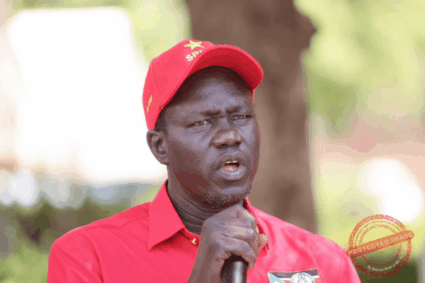
The designated Chairperson of the Information Committee at the Revitalized Transitional National Legislative Assembly (RTNLA), Paul Yoane, has revealed that the heads of the listed institutions have been given seven days to respond to the queries directed at their respective dockets.
Mr Yoane said the summoned state officials heading these institutions would be taken to task to explain the reasons for the high prices of basic commodities and provide remedial measures in place for the same.
Concerns raised
Yoane said the officials are expected to explain why South Sudan’s markets are populated by foreign traders who have been blamed for dictating the market prices.
“The prices of commodities in our markets are very, very high these days,” said Yoane. “Our markets have been dominated by foreigners, and South Sudanese are not in control of their markets.
“We are supposed to be a mixed economy rather than a free economy. In a free economy, anybody can come and do anything that he wants, but in a mixed economy, we can control the prices, ” he added.
Market prices of basic commodities in Juba went higher when the exchange rate increased to more than SSP600 per USD dollar some months ago.
The Central Bank then sanctioned the auctioning of the dollars to commercial banks and forex bureaus, which paid off in terms of stabilising the local currency, but the gains are yet to trickle down to be felt by the consumers.
Even though the dollar has been stabilising, some citizens have persistently complained about the continued increment in prices of consumable goods such as rice, maize flour, beef, cooking oil, and onions, as well as beans and sugar.
Salary didn’t help
During his speech on the celebration of South Sudan’s 10th anniversary of independence, President Salva Kiir ordered the implementation of a 100 per cent salary raise for civil servants and organised forces. However, according to some government employees, the change is like a drop in the ocean; they are not able to match the runaway prices of commodities in the market.
For instance, a civil servant who identified herself as Joyce for fear of reprisal lamented that her new salary did not meet the price of a typical food basket per day.
“We cannot talk again about this thing (prices) because, especially for those of us who work for the government, our salaries cannot buy us food, even for a day. Things are very high in the customs market,” she lamented.
“The government said they have increased our salaries. Where is the increment? Is the increment they talk about when the money cannot buy food for you in a day? How much does a drum of water cost, along with meat and flour? When you come to the market, you become confused and don’t know what to buy with this little money, ” said Joyce.
Prices rise
The City Review on Wednesday conducted a market price survey for basic commodities which showed that while prices of commodities such as rice, beans, and beef were constant; prices of cooking oil, maize flour, and onions had increased over the past weeks in the customs market.
For instance, a kilogram of lentils was sold at SSP600 two weeks ago, but it is now bought at SSP800. 1 kg of maize flour, which was costing SSP250, has increased to SSP400. 1 kg of onion, which used to be sold at SSP500, now retails between SSP900 and SSP1,000. A litre of cooking oil is now retailing at SSP1,000 up from a previous price of SSP700 two weeks ago.
A kg of rice, beef, and beans has remained constant, being sold at SSP 800, SSP3400, and SSP600, respectively.
“The government has to do something about the prices of goods not only in Juba but all over South Sudan,” said 56-year-old Joseph Lodule, a resident of Munuki. “They used to say dollar, dollar, but the rate has been reduced and prices are high.”
Mr. Yoane said other contributing factors to skyrocketing prices in South Sudan which they want authorities to address are related to the poor road network, which would be important in facilitating the movement of people and goods.
“We need to have connectivity to the areas of production if at all possible. We have feeder roads and trunk roads that link the towns to the production areas.
“This is one of the difficulties; unless all of us work together to achieve peace in the country, I believe we will continue to rely on our neighbours for food.”
“We need to have a stable society because of insecurity, those who want to be productive cannot be until there is total peace in the country. Only then can we compete with our brothers and sisters from other East African countries,” Yoane said.