




The Muslim community in South Sudan has concluded the annual commemoration of Eid al Adha with a call for lasting and sustainable peace in the country.
On Tuesday, July 20, 2021, more than hundreds of Muslims attended Eid al Adha prayers at the Midan Zahar in Juba.
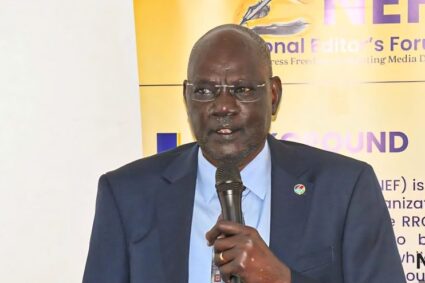
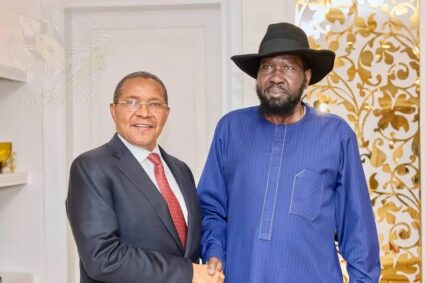
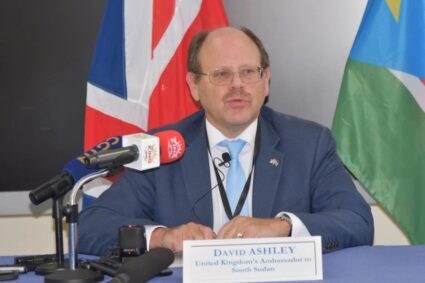
Speaking during the festival, Sheikh Juma Saad (pictured centre) appealed to South Sudanese refugees still stranded in refugee camps across the region to return home and called on the government to ensure sustainable peace to enable the reintegration of returnees into their communities.
“We want those people who are outside, who are in refugee camps, who are in the diaspora, this is your country. You cannot get any country that is better than your country. Our message is that you come back to the country so that next year when we celebrate this occasion, all of us will be together.”
Sheikh Saad called for togetherness, sending his greetings to the interfaith leaders and emphasising that Eid al Adha is a celebration for all South Sudanese, regardless of their religious identities.
“Want to congratulate our religious leaders at the side of the Christians, especially Archbishop Justine Aroma, and then Archbishop Stephen Ameo and the Archbishop Isiah Dawo. This celebration is not for Muslims only. It is for all of us because the story of Abraham sacrificing his son is not for Muslims only, it’s not for Christians, it’s for all of us.”
This year’s Eid Al Adha celebrations have been unusual and better, according to Juma, because of the peace and stability that has allowed the Muslim community to observe the day without worry.
He praised President Salva Kiir and his government for their efforts in maintaining peace.
“I think this year is very different because we have security in the country, people are moving and we thank the government, the head of the government especially H.E the president of the Republic of South Sudan for bringing back peace and we are enjoying the fruits of peace in South Sudan.”
Eid Al Adha or the festival of sacrifice marks the end of the annual haji pilgrimage to Mecca in Saudi Arabia.
Muslims celebrate by slaughtering animals including sheep, goats and cows, in commemoration of the prophet Ibrahim’s readiness, to sacrifice his son in a sign of obedience to God.
Eid treat
On the same day, the Islamic Council together with Achai Wiir Foundation organised a ceremony programme for the central prison in Juba where they released Eight inmates after clearing their debts
Most of the convicts were arrested on very minor charges like those who failed to pay money that they had borrowed from people and could not pay. Those released are two women and six men.
Each convict was freed at a fee of between 40,000 and 200,000 South Sudanese Pounds.
Eid al-Adha, also known as Festival of the Sacrifice, is the latter of the two official holidays celebrated within Islam (the other being Eid al-Fitr or ‘Festival of the Breaking of the Fast’). It honours the willingness of Ibrahim to sacrifice his son Ishmael as an act of obedience to Allah’s command.
Before Abraham could sacrifice his son, however, God provided a lamb to sacrifice instead. In commemoration of this intervention, animals are sacrificed ritually. One-third of their meat is consumed by the family offering the sacrifice, while the rest is distributed to the poor and needy. Sweets and gifts are given, and extended family are typically visited and welcomed. The day is also sometimes called Big Eid or the Greater Eid.
In the Islamic lunar calendar, Eid al-Adha falls on the 10th day of Dhu al-Hijjah and lasts for three days. In the international (Gregorian) calendar, the dates vary from year to year, shifting approximately 11 days earlier each year.