

Nyamini area demarcation put on hold as territorial disputes deepen

The state Security Committee performed an on-the-ground assessment in Nyamini and paused all demarcation activities until a peaceful resolution is achieved among the affected communities.
By William Madouk and Chuol Chanyong
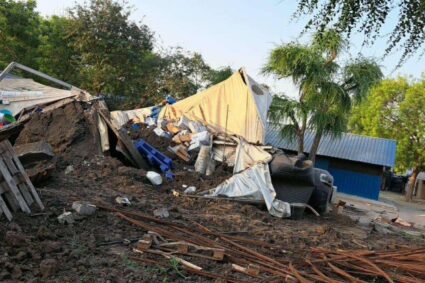
The government of Central Equatoria State (CES) has put on hold land demarcation in Nyamini location in Juba County due to ongoing territorial conflicts between local populations in Dollo Payam, Jebel Lado, Tijor, and Kuda Lo Dimi.
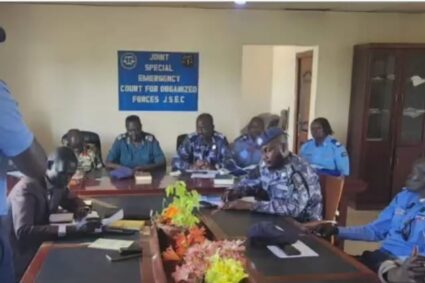
The decision follows a resolution passed during the weekly Ordinary Security Meeting held on Tuesday at the State Secretariat and chaired by Paulino Lukudu, the Deputy Governor of the state.
CES Security Committee performed an on-the-ground assessment in Nyamini and paused all demarcation activities until a peaceful resolution is achieved among the affected communities.
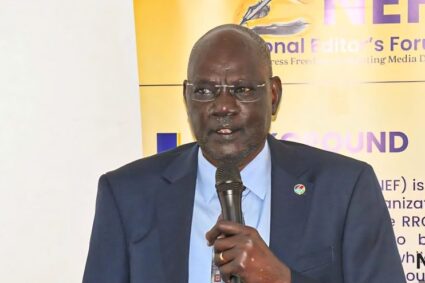
Speaking at the site, Leon Abe Brown, the State Minister of Local Government and Law Enforcement Agency, explained that the decision is not meant to stop development in the region, but to allow for an inclusive and peaceful resolution before any further activities begin.
“This move is in line with Resolution No. 15 of the State Security Meeting and the Gubernatorial Order suspending all Community Development Committees (CDCs). No demarcation should proceed without official authorization from the Ministry of Housing, Lands and Public Utilities or the Commissioner of Juba County,” said Abe Brown.
He explained that leaders and representatives of the disputing communities will be called to the office of the Juba County Commissioner to deliberate on a sustainable and peaceful way forward.
Mr. Abe Brown also highlighted other critical issues discussed by the committee, including the urgent need to improve healthcare services in Juba.
He said the State Ministry of Health has been directed to begin a comprehensive review of health facilities in collaboration with the National Ministry of Health and Juba City Council.
Abe Brown called on security agencies to intensify operations against criminal youth gangs known as “Niggas” and “Torontos,” and to strengthen efforts aimed at curbing drug abuse among young people in the capital.
Meanwhile, the area security commander reported that the situation in Nyamini remains calm.
Security forces on the ground have been tasked with enforcing the suspension of all land-related activities until further notice from the State Government.
Since the 2005 Comprehensive Peace Agreement (CPA) and the 2011 independence of South Sudan, land disputes have been a dominant concern for many South Sudanese.
This has been particularly common in the capital, Juba, where land disputes have impacted people’s ability to return home after war displaced them.
A recent clash in Munuki, Juba, between members of the Episcopal Church and local residents over disputed church land drew national attention.
Church leaders accused state officials of land grabbing, while the community claimed the church’s land title was forged. Authorities have since suspended land allocations in the area pending investigation.
Activist such as Dorothy Drabuga, the chairperson of the South Sudan Land Alliance (SSuLA), urged MPs to place the National Land Policy at top agenda of legislation when Parliament resumes.
She underlined the significance of implementing the strategy to address South Sudan’s ongoing land-related difficulties.
“For nearly 20 years, South Sudanese communities have waited for a land policy that safeguards their rights, reduces conflict, and unlocks development,” Drabuga said a press conference in Juba.