




The independence of South Sudan was gained through a long-armed struggle that first broke out in 1955, one year prior to Sudan’s independence in 1956.
When the colonial government was packing and about to leave to pave the way for Sudan’s independence in the aforementioned year, the Southern Sudanese leaders wanted their own country.
However, when colonialists did not heed to their legitimate demand—for reasons best known to them—the then Southern Sudanese leaders rebelled and left for the bush to fight for their right of self-determination, which was actualised a decade ago.
If you remember, it was for this reason that in 2005, at Nyayo Stadium, during the signing of the Comprehensive Peace Agreement (CPA), the late Dr John Garang de Mabior, in his speech, said that South Sudanese were not part of the 1956 independence and that with the CPA, we would begin achieving real independence.
Despite the independence of South Sudan, armed insurgencies and rebellions in the country did not die a natural death.
Many armed groups that were not part and parcel of the SPLM/A before independence opted to remain in the bush. They believed the independence struggle was hijacked and that it was in the wrong hands. As a result, they insisted on fighting the SPLM/A regime, believing that true independence would be achieved once the current regime was replaced.
For instance, some leaders of the 1991 Nasir Declaration and Anyanya 1 were typical examples of those who did not believe in South Sudan’s independence because many of them since 2011 did not step foot in the country.
In fact, I am unaware of any known and effective political party which did not come through the bush. In other words, all political entities in the country were at one time guerilla movements.
As of now, you will find that almost every political party in the country has armed groups. The national army, SSPDF was initially called Sudan People Liberation Army (SPLA), which was a former army wing of the ruling SPLM. It was around 2016 that it was renamed as South Sudan People’s Defence Forces (SSPDF), and most government officials are still active military officers.
After the outbreak of the December conflict, there were many armed groups, some of which were fighting against the government. In Unity State alone, we had a group of the SPLA-IO of Dr Riek Machar, defunct SPLM/A-IO faction of Gen. Taban Deng, the SSPM of Gen. Stephen Buay Rolnyang, NPAM by Gen. Robert Ruai Kuol, and SSUM by late Gen. Peter Gatdet Yakah and the rebel movement of Gen. Bapiny Manytuil. These were the traditional armed rebels, and we cannot discuss rebellion without mentioning them.
In response, the government has been trying to convince and contain these armed groups by offering general amnesty and key government positions but in vain. On this very evening of January 16th, the government delegations in Khartoum signed a peace deal with the SPLM-IO Kit Gwang faction led by Gen. Simon Gatwech Dual, Gen. Johnson Olony Thabo, and Gen. Thomas Mabor Dhoal. This faction broke away from Dr Riek Machar’s mainstream SPLM-IO in August last year.
Although the content of their agreement is not yet out for wider perusal, chances are that these leaders will be awarded and offered senior, lucrative positions both in the arm of the government and the military. The question is, how sustaining are the tactics of integrating such people into the government? The government has been applying these strategies prior to independence, but it has only done the country worse than good. This is because the number of rebel groups keeps increasing. As the government signs peace agreements with another outfit.
The government cannot continue applying the same tactics and styles consistently and expect different results. Unless we want to encourage more rebellions, the two strategies are outdated and need to be changed.
Proper mechanism
One of the things I have in mind that is worth testing and trying by the government if it is acting in good faith is to establish a quasi-judicial institution that will exclusively deal with matters of rebellion.
I think we need to constitute this rebel tribunal to be approved by parliament. This body can be obligated to receive and hear all the concerns and complaints raised by rebel groups that enter into an agreement with the government, and later write recommendations to be acted upon promptly.
The government would have done this via an appropriate channel provided for in the Revitalised Agreement on the Resolution of the Conflict in South Sudan (R-ARCISS) but that has not been the case.
Therefore, it needs to initiate its own institution to quickly handle these recurrent challenges bedevilling the country.
As I can fondly recall, the rule of law and democracy were some of the key demands most rebel factions touched on as their primary concerns. Unfortunately, the government is doing nothing or little to achieve these fundamental ideals in the country. So, we are not yet off the hook as a country.
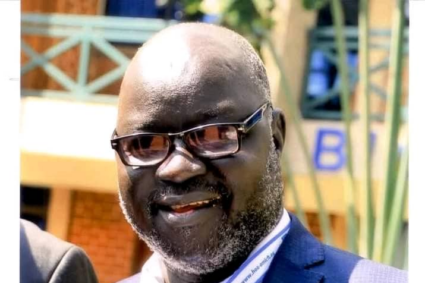
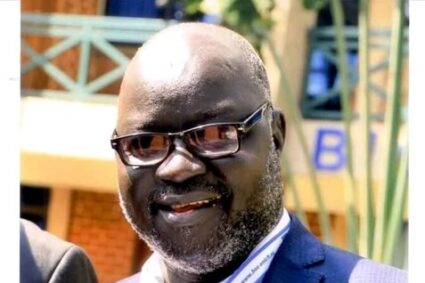
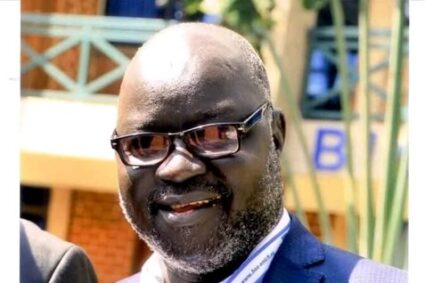
The writer is the Chairman of Liech Community Association in Kenya, the views expressed here are his own, and he can be reached for comments via eligodakb@yahoo.com
DISCLAIMER: All comments and opinions appearing on this website are those of the authors and do not represent the editorial view of The City Review Newspaper.