



Tonj North Raid Underscores Urgent Need for Peace and Disarmament

By Yien Gattuor
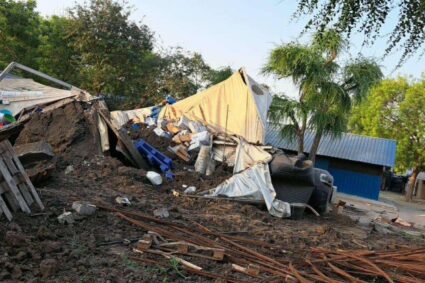
The tragic loss of at least 15 lives and injuries to 24 others during a violent cattle raid in Tonj North County, Warrap State, highlights the persistent challenge of insecurity in South Sudan—one deeply rooted in cycles of armed youth violence, cattle rustling, and community retaliation.
According to local authorities, the raid was carried out by armed youth from Mayom County in Unity State. Tonj North County Commissioner, Mawein Akech Mawein, confirmed that 10 people from his county were killed, while five of the attackers also lost their lives during the confrontation. The Red Cross was instrumental in airlifting the critically wounded to Juba for advanced medical care.
“These were not mere skirmishes. These were armed, coordinated attacks that left communities grieving and fragile,” said Commissioner Mawein. “We are grateful to the Red Cross for their swift response in saving lives, but the deeper wounds—division, fear, mistrust—will take longer to heal.”
Mayom County Commissioner, James Lilly Kuol, condemned the raid, calling it a reflection of a disturbing trend that has gained momentum since the beginning of the year. “Cattle raiding is no longer about cultural tradition—it’s an enabler of mass violence. It threatens our social fabric, and no community can prosper in such insecurity,” he said.
A Nation at a Crossroads
This violence comes at a critical moment in South Sudan’s political and social trajectory. Just days before the attack, the South Sudan People’s Defense Forces (SSPDF) launched a disarmament campaign across Warrap and Unity States, urging youth to voluntarily surrender illegal weapons within a week. SSPDF Spokesperson Maj. Gen. Lul Ruai Koang warned that failure to comply would trigger coordinated forceful disarmament.
With the deadline now expired and communities still reeling from renewed violence, questions remain about the efficacy of the campaign and the willingness of local youth—often embedded in informal militias and kinship-based loyalties—to relinquish arms.
The government’s resolve was signaled earlier this month when President Salva Kiir declared a six-month State of Emergency in Warrap and Mayom, citing spiralling insecurity.
Learning from Africa’s Post-Conflict Transitions
South Sudan’s situation echoes challenges faced by other African nations transitioning from armed conflict to democracy and peace. In Mozambique, following the end of the civil war in 1992, the government worked closely with RENAMO rebels under a demobilization and reintegration program supported by international partners. Similarly, Rwanda, post-genocide, launched a massive national reconciliation campaign while disarming and reintegrating ex-combatants through community-based Gacaca courts and DDR (Disarmament, Demobilization, and Reintegration) programs.
Even in Sierra Leone and Liberia, countries that experienced years of civil strife, disarmament succeeded only when it was coupled with sustained dialogue, economic reintegration, and community reconciliation. These countries learned that true peace is not achieved by removing weapons alone—it requires addressing the grievances that fuel conflict, restoring trust between communities, and creating economic alternatives to violence.
South Sudan can draw vital lessons from these experiences. Top-down disarmament without community participation and local buy-in risks sparking more conflict than it resolves. Moreover, if disarmed youths return to communities where poverty, unemployment, and unresolved trauma persist, the cycle of violence may only be interrupted temporarily.
A Call for Strategic Peacebuilding
The recent Tonj North raid is not just another isolated episode—it is a warning bell. It signals the fragility of peace in the absence of deeper, coordinated strategies to address local conflict dynamics. Disarmament must go hand in hand with civic education, youth empowerment, and robust local governance structures.
Both state and national authorities must engage chiefs, religious leaders, women, and youth in building local peace frameworks—structures that can address grievances before they escalate. Regional collaboration and intelligence-sharing, especially across county lines like Tonj North and Mayom, are equally critical.
As South Sudan seeks to build a peaceful, democratic future, these violent incidents must not be normalized. They should serve as sobering reminders that peace is not the mere absence of war—it is the presence of justice, trust, and shared purpose.
Until then, communities like Tonj North will continue to count their dead while clinging to hope that one day, weapons will be replaced by tools of productivity, and raids by reconciliation.