





Traders in Western Equatoria raise concerns over business survival

By Emmanuel Mandella
Local traders in Western Equatoria State have warned of an impending collapse of the retail sector, citing soaring taxation, insecurity, and poor infrastructure.
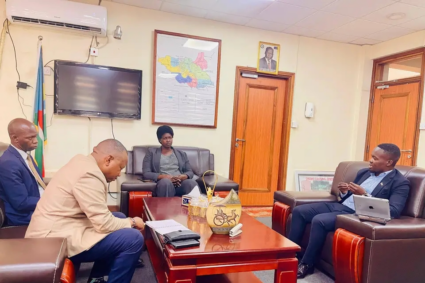
This was noted during a recent market inspection in Yambio town by the state Minister of Commerce and Trade, in which most traders decried the unsustainable economic pressure they face daily.
“We are suffocating under these taxes, just to bring in 50kg of sugar, we pay SSP 26,500, and a jerry can of cooking oil costs SSP 17, 200,” the traders said.
“So, these prices are not just affecting us, but our customers can no longer afford to buy.”
On his part, Minister Haim Paul Izaya acknowledged the grievances and promised government intervention to address the challenges facing traders in the state.
“As the economic cluster, we’ve taken note and will present these concerns to the Council of Ministers and the State Legislative Assembly. There is a need to streamline taxes and cushion citizens from the ripple effects of a failing currency,” Paul said.
However, it’s not only the urban traders sounding the alarm, remote villages like Diabio Boma in Ezo County are equally complaining.
During a humanitarian relief distribution by Shalom Catholic Organization over the weekend in Diabio of Ezo County, Mr. Misiere Ziapere, an 85-year-old beneficiary, expressed deep concern over price hikes in their area.
“We can’t afford to buy even the basics, one bar of soap now costs 6,000 SSP, and a packet of salt is 5,000 SSP. We’re being punished by the economy. The government needs to act now”, he lamented.
Across the state, rural dwellers share similar struggles, as Elizabeth Niwia, a 56-year-old from Nagero County, highlighted the impact of insecurity on commodity access.
“We are surrounded by conflict roads to Wau and Tombura are blocked. No goods are coming in, and prices are sky-high. Women are suffering the most,” she said.
In Mundri East, Juma John echoed calls for better infrastructure, “Without roads, we can’t expect prices to go down. Transportation is costly, and that burden is passed on to us,” he explained.
This comes amid broader national economic concerns, even as Vice President Dr. Benjamin Bol Mel recently pledged that civil servants would start receiving their salaries regularly on the 24th of each month, a promise yet to materialize for many in the region.
Experts say South Sudan’s reliance on oil revenues, limited local production, and multiple layers of unregulated taxes have left the economy exposed to shocks.
The ongoing depreciation of the South Sudanese pound against the US dollar is worsening purchasing power.
A recent report from the National Bureau of Statistics shows that inflation surged by over 30% year-on-year, driven primarily by food and transport costs.
For now, the cry from Western Equatoria is clear, and without urgent government intervention, more businesses may shut down, and ordinary citizens will bear the brunt.