



Government told to ‘utilise the $2trillion continental free trade pact’

The South Sudan government has been told to make effective use of the African Continental Free Trade Agreement (AfCFTA) going into operation in January 2021 when many of Africa’s largest economies will start duty-free trading of goods.
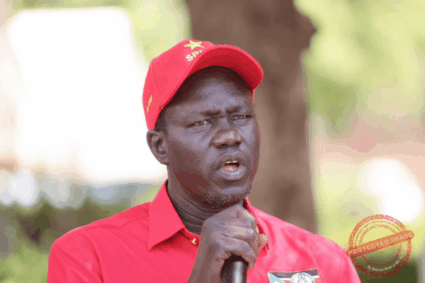
Foundation for Democracy and Accountable Governance Executive Director, Jame David Kolok believes the agreement will present an opportunity for South Sudan to attract foreign investors who would be seeking diverse markets for goods and services.
He told The City Review that after a long period of political and economic debacles, the country’s momentum to withstand competition at international business landscape has been shaky and the AfCFTA could be a leeway to a positive shift.
“Obviously, the conflict has had a drastic impact on South Sudan ability to stand up in the community of trade and dignity. And this is simply because the state of affairs generated by the conflict have undermined a lot of the fundamentals used to strengthen the economy,” he said.
“The African Continental Free Trade Area is a fundamental project which I think could provide South Sudan with an opportunity to engage with different trading blocs, whether EAC or ECOWAS,” Kolok added.
The Executive Director said the inclusion of South Sudan in the AfCFTA could help in steering the wheels of much-needed political and economic reforms as the country would learn and copy from a plethora of morals from our member states.
“There are fundamentals that guide a member state in engaging in matters of trade and these involve establishment of [clearly-defined] economic policies, it involves ensuring that you are able to provide whatever ability to export and import goods whose standard does not undermine the affairs of member states.
Kolok says being part of the trade pact would also have security implications on South Sudan as the country, like any other AfCFTA member state, would have to beef security to guarantee a free and safe trade environment for investors.
“The bottom line is that member states should be able to provide a free environment for investment and to build confidence in financial institutions.
“And the immediate implication of this is that, South Sudan will have to abide by the rules, meaning that this will provide opportunity to the country to improve its economic [and political] environment, which is a positive move,” Kolok emphasized.
African Union Chairman and South African President Cyril Ramaphosa told a recently concluded virtual summit that the AfCTA would boost intra-African trade, promote industrialization and competitiveness and contribute to job creation.
Ramaphosa also said the agreement, if made operational, would unleash regional value chains that would facilitate Africa’s meaningful integration into the global economy. The AfCFTA will also improve the prospects of Africa as an attractive investment destination.
Over 40 countries have signed the agreement, which is expected to cover all 55 African countries, with a combined GDP estimated at US$2.2 trillion.
All African states, except Eritrea, have signed the AfCFTA and 34 have ratified it.
Prior to the summit, however, only 10 countries had both ratified the AfCFTA and submitted tariffs offers.
These were Chad, Republic of Congo, Egypt, Equatorial Guinea, Eswatini, Gabon, Mauritius, Namibia, Sao Tome and Principe, and South Africa, according to Niger President Issoufou Mahamadou, who is the AU’s leader and champion of the AfCFTA process.
But the AU is making an effort and pushing countries not ready to trade on January 1 ‘to get on the bus’. The summit resolved that these states, including South Sudan, should ratify the AfCFTA and submit their tariff offers by June 30th 2021.