



WES acting Governor condemns mixed-gender detention in Gangura

This kind of setup, he warned, increases the risk of sexual abuse, intimidation, and trauma, especially for women and young girls.
By Emmanuel Mandella
The Acting Governor of Western Equatoria State, James Severino Morris, has condemned the move by authorities to detain men and women in the same makeshift cells in Gangura Payam in Yambio County, saying it has contributed to more crimes in the detention centres.
Speaking during a community dialogue in Gangura on Wednesday, Morris, who also serves as the Minister for Local Government and Law Enforcement expressed outrage over the “serious human rights violation,” fueled by the lack of basic law enforcement infrastructure in the area.
“It is very bad to put a woman and a man in one cell. I felt it myself. Suppose it is my sister, suppose my wife, my child. That feeling we should all have it. What happens in that room? Nobody knows!” Acting Governor Bakoyogo said.
Characterised by makeshift cells, lack of shelter, and policing under trees, the situation in Gangura paints a grim picture of the system of justice in the area. The only holding facility is a small, community-built room that lumps male and female detainees together. Local youth and traditional leaders confirmed the situation, saying it is unsafe and humiliating.
This ad hoc setup, Morris warned, increases the risk of sexual abuse, intimidation, and trauma, especially for women and young girls. “This is not law enforcement; this is institutional neglect,” he said.
Odetta Miwai, a leading civil society activist in Yambio who doubled as deputy chairperson for Western Equatoria State Network for Civil Society, said the practice clearly violates South Sudan’s Criminal Procedure Code, which requires that detainees are separated by gender and age.
“This is a logistical oversight and a violation of fundamental human rights and the nation’s laws,” Miwai explained. “We must protect the dignity and security of detainees, especially vulnerable women, who are entitled to privacy and safety even in custody.”
According to the Criminal Procedure Act 2008, under Section 67, “female prisoners shall be kept in separate cells and be under the supervision of female officers.”
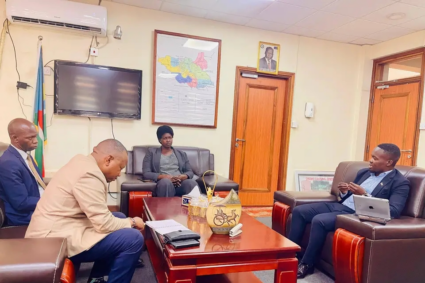
Jane Kony, Head of the UNMISS Field Office in Western Equatoria State, acknowledged the situation and expressed the UN mission’s willingness to support the development of gender-sensitive police infrastructure.
“We are aware of the structural limitations and are working with state authorities to address the issue,” Kony said. “Security must never come at the cost of human rights.”
She also noted that improving detention facilities aligns with UNMISS’ broader mandate of strengthening rule of law institutions and protecting civilians in fragile settings.
Residents of Gangura and surrounding areas are now appealing to the state government, UNMISS and humanitarian partners to construct a proper police post with separate holding cells, trained staff, and essential services.
John Gbati, a youth representative in Gangura, said, “We understand the challenges, but our dignity and safety matter. We need help urgently.”
Gangura situation situation lays bare the broader conversation about South Sudan’s chronic underfunding of law enforcement units and agencies, particularly in rural areas. Many counties across the country face similar conditions: police working without offices, detainees held in unsafe structures, and a shortage of trained female officers, all of which call for urgent attention.
A 2023 report by the South Sudan Law Society (SSLS) revealed that over 70% of rural detention facilities lack basic gender-separation mechanisms, despite international humanitarian laws and national statutes requiring them.