



Yambio Farmer Calls for Community Transformation Through Local Produce

Mathew Buku believes locals can re-energize their efforts in farming to produce much more yield that can satisfy local demand and supply to other areas to fight food insecurity
By Emmanuel Mandella
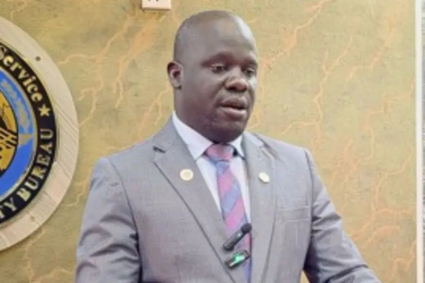
In a compelling call for food security and community empowerment, Yambio-based farmer Mathew Buku has captured local attention after successfully supplying fresh cassava leaves from his garden to MASIA Market in Yambio Town. His appeal is simple but powerful: support homegrown produce and embrace agriculture as a way of life.
A father and member of the Western Equatoria State Network for Civil Society Organizations, Buku shared his achievement and vision through a post on his social media platforms on Friday. He reaffirmed his commitment to meeting local demand for fresh, organic, and nutritious food.
“It gives me great pleasure to supply MASIA Market with fresh cassava leaves today, directly from my garden. Anyone in need of more can contact me. I’m ready to supply as soon as possible,” he wrote.
But Buku’s message extended beyond business. It was a heartfelt plea for a stronger, community-driven food system. He urged fellow residents to support local farmers and reduce dependence on imported food.
“Come one, come all. Let’s support our health and our local economy,” he added.
His initiative reflects a growing movement in Western Equatoria State, where farmers—especially women and youth—are reclaiming agriculture as a source of dignity, income, and resilience.
Last month, Bianca Peter, a young female farmer renowned for her supply of sweet potatoes, groundnuts, and other crops in Yambio, called on authorities to address challenges that hinder smallholders from reaching broader markets. In an interview with The City Review, she cited insecurity and poor road infrastructure as major obstacles.
“We need good roads and security to ensure we can supply the whole country with our products. There is enough food across Yambio, but the problem is poor roads and insecurity. Let our people depend on our own food, not what comes from outside,” she said.
Bianca also emphasized the need for training, access to modern tools, and financial support to help farmers scale up their operations.
Since the reinstallation of the Azande Kingdom after 117 years, His Majesty King Atoroba Peni Rikito Gbudue has used his platform to encourage a return to farming. His message has resonated widely, especially with the youth, urging citizens to view agriculture not as a fallback, but as a dignified and vital path to self-reliance.
Buku’s initiative is widely seen as a response to that royal call. His cassava supply has sparked a wave of encouragement and praise across Yambio and on social media platforms such as Facebook and WhatsApp.
“This is the spirit we want. Thank you, Mr. Buku. You’re doing something our people can be proud of,” commented Grace Nasiwa, a local entrepreneur from Hai Baiparu residential area.
“The cassava leaves were fresh and clean. This is what we need. Let’s buy from our own,” said Wenesa Peter, a regular MASIA Market customer.
Others reposted his update with messages of support and calls for more farmers to follow his lead.
At a time when inflation and dependence on imported food continue to burden South Sudan’s economy, grassroots champions like Buku and Bianca are offering a practical, sustainable solution rooted in community and culture.
As the new farming season begins and national conversations on economic diversification continue, Western Equatoria is quietly positioning itself as a model for agricultural transformation—starting, quite literally, with one cassava leaf at a time.