


Civil Servants salaries, debt servicing up as 2025/26 draft budget presented to Parliament

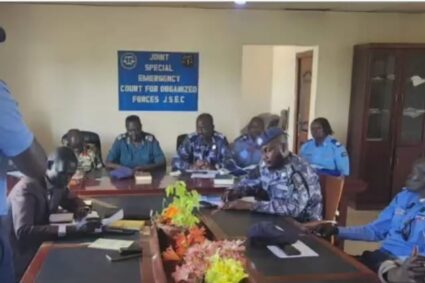
For years, delayed and irregular salary payments have remained one of the most persistent grievances among teachers, health workers, civil servants, and members of organized forces across South Sudan
By Emmanuel Mandella
After months of uncertainty and mounting pressure from unpaid public servants, the Government of South Sudan has placed salaries at the center of its long-awaited 2025/26 national budget, allocating SSP 1.90 trillion to wages and compensation in what officials describe as a bid to stabilize the country’s struggling public sector.
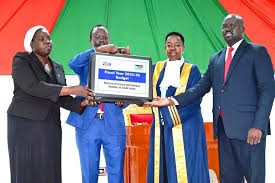
Presenting the SSP 7trillion Draft National Budget before the Transitional National Legislative Assembly (TNLA) on Monday, Minister of Finance and Planning Dr. Bak Barnaba Chol said the government had deliberately prioritized the payment of civil servants as part of a broader effort to restore confidence in state institutions and ease social and economic strain.
“The largest share of this budget is dedicated to wages and salaries because the government recognizes its obligation to public servants who continue to serve under very difficult conditions, paying salaries is not a favor; it is a responsibility,” Chol told lawmakers.
A response to years of salary delays
For years, delayed and irregular salary payments have remained one of the most persistent grievances among teachers, health workers, civil servants, and members of organized forces across South Sudan. In many parts of the country, public employees have gone months without pay, forcing families into debt and undermining morale within government institutions.
The allocation of SSP 1.90 trillion to wages, the single largest line item in the new budget, signals what analysts see as an attempt by the government to respond to that long-standing crisis.
“This budget sends a political message,” said an economist. “The government understands that unpaid salaries translate into weak institutions, corruption, and public anger.”
Stability over Expansion
Finance Minister Chol described the 2025/26 budget as a “discipline-driven stabilization budget,” emphasizing that it is designed to meet existing obligations rather than introduce new spending programs.
Total government revenue is projected at SSP 7 trillion, while expenditure stands at SSP 8.58 trillion, leaving a fiscal deficit of SSP 1.58 trillion. Despite the shortfall, Chol said the government made a deliberate choice to protect salaries.
“We cannot talk about reforms, service delivery, or accountability if the people implementing government policies are not paid,” he said.
The government expects SSP 5.22 trillion of its revenue to come from oil, with SSP 1.78 trillion from non-oil sources, underscoring continued dependence on petroleum exports to fund basic state functions including salaries.
While some lawmakers cautiously welcomed the salary-focused approach, others questioned the credibility of the budget, noting that it was presented more than seven months late.
Samuel Buhari Loti, MP for Torit County, criticized the timing and legality of the presentation, arguing that lawmakers were being asked to approve a budget that had already been partially spent.
“This budget was supposed to be presented months ago, how do we approve salaries and expenditures when no expenditure reports have been submitted to this House?,” Loti told the Assembly.
Despite the criticism, Speaker Jemma Nunu Kumba urged MPs to allow the process to move forward, arguing that formalizing the budget would help the Ministry of Finance prepare more effectively for the next fiscal year.
“Let us allow the minister to present the budget so that we can move forward and prepare for the 2026/27 financial year,” she said.
Outside parliament, the news was met with cautious optimism among civil servants, many of whom say promises of salary payments have been made before but not fully honored.
In Yambio, Western Equatoria State, a secondary school teacher said the budget announcement offered hope, but only if it translates into actual payments.
“We hear figures every year, but what matters is whether salaries reach our accounts,” he said.
“If teachers are paid regularly, the quality of education will improve automatically.”
A nurse at a government hospital in Yambio echoed similar sentiments, saying:
“When salaries delay, health workers leave the hospitals or look for other work, and if this money is really paid, it will save lives,” she said.
Analysts argue that prioritizing salaries could have broader implications for governance, security, and service delivery.
“When civil servants are paid, corruption reduces, productivity increases, and trust in government improves. This allocation is not just economic; it is political and social,” said a governance expert based in Juba.
However, experts warn that sustained salary payments will depend on oil revenue stability and tighter control of public finances.
As the budget moves to parliament scrutiny, many South Sudanese see the salary allocation as a test of the government’s political will to honor its commitments.
“If the salary issue is addressed consistently, this could mark a turning point. But if delays continue, public frustration will deepen,” said Umeko Joseph a local civil society activist based in Yambio.
For now, the 2025/26 budget has raised expectations among thousands of public servants whose livelihoods depend on state wages. Others are also hopeful that allocations in areas such as infrastructure, health and education will create massive change if realised.