

Looming shutdown of 14 health facilities in Tombura threatens lives as funding dwindles

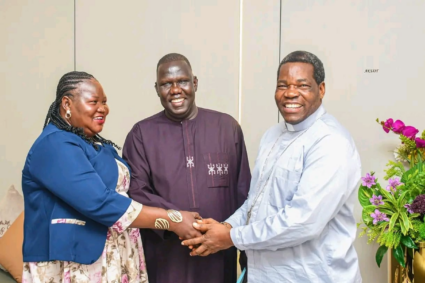
The alarm was raised this week when a delegation from Tombura County travelled to Yambio to formally petition the Western Equatoria State Ministry of Health, and appealed for urgent intervention
By Emmanuel Mandella
Fears of a deepening humanitarian and public health crisis is mounting in Tombura County after community leaders warned that the planned closure of 14 health centers could leave nearly 88,664 people including internally displaced persons (IDPs), returnees and refugees without access to life-saving medical services.
The alarm was raised this week when a delegation from Tombura County travelled to Yambio to formally petition the Western Equatoria State Ministry of Health, appealing for urgent intervention to prevent the ‘impending health catastrophe’ in one of the state’s most fragile and conflict-affected counties.
Speaking to journalists after the meeting, Moses Mercy Cele, Acting Executive Director of Tombura County and head of the delegation, said the closures linked to funding shortfalls would disproportionately affect women, children and the elderly.
“Based on the statistics, Tombura has been marginalized and ignored. There is misinformation circulating that there are no people in Tombura, which is entirely false, there are many vulnerable people here. Closing these facilities feels like a betrayal, and it will cost lives,” Mercy said.
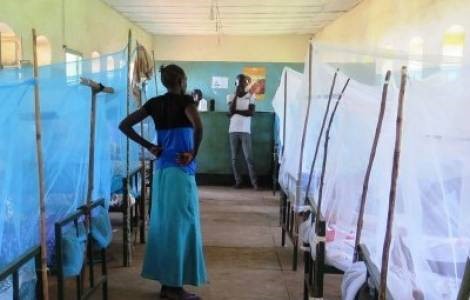
According to local authorities, the looming shutdown would disrupt essential services such as maternal health care, immunization, treatment of malaria, tuberculosis and emergency referrals, in a county that already struggles with poor road networks and limited transport.
Health officials warn that the consequences could be dire.
“Closing 14 facilities means pregnant women will deliver at home without skilled care, maternal and child deaths will increase. This is not speculation; this is reality,” Mercy warned.
Tombura County borders the Democratic Republic of Congo (DRC) and the Central African Republic (CAR), making it a critical humanitarian corridor that hosts displaced populations from conflict on both sides of the border. Community leaders say the county has already been receiving irregular medical consignments since last year, with shortages worsening since donor funding began to shrink.
For his part, Edward Dazangapai, the County Health Director of Tombura, questioned why Tombura appeared to be bearing a heavier burden than other counties in Western Equatoria State.
“Why Tombura alone, out of the ten counties in this state, cutting 14 health facilities here is tantamount to endangering an entire population. This decision should have involved local consultation?” Dazangapai asked.
Dazangapai stressed that health services in Tombura are not a luxury but a necessity, especially after years of insecurity that displaced thousands and weakened community coping mechanisms.
However, Banaisa Thomas Sigini, the Acting Paramount Chief of Tombura, said the community is deeply unhappy with the decision and warned of growing frustration among residents.
“Those claiming Tombura has few people should come and see for themselves, there are women, children, the elderly over 88,000 people excluding those who fled to Ezo and Yambio. Closing health facilities under these conditions is unacceptable,” he said.
The chief appealed to both the state and national governments, as well as development partners, to urgently reconsider the plan.
The Tombura situation reflects a wider national challenge facing South Sudan’s health sector, across the country, donor-funded health programs are shrinking following global aid reductions, competing international crises, and donor fatigue, leaving fragile systems exposed.
Western Equatoria State Minister of Health, James Abdallah Arona, acknowledged that the current health crisis is linked to funding constraints under the Health Sector Transformation Project, launched in 2024.
“Initially, seven donors supported the project, but two later withdrew. Out of 145 health facilities across the state, 27 may be affected, leaving 118 functional. We are still awaiting for final guidance from Juba,” Arona explained.
Health analysts warn that similar funding gaps are being felt in Upper Nile, Jonglei, Unity and parts of Greater Equatoria, where humanitarian agencies have scaled down operations, closed facilities, or merged services often leaving rural communities with no alternatives.
Can Government Step In? A Question of Political Will and Priorities
As donor funding declines, pressure is mounting on the Government of South Sudan to step in and fill the gap especially given the country’s vast natural resources, including oil, fertile agricultural land and water resources.
Policy experts argue that while South Sudan remains heavily aid-dependent, the current crisis presents an opportunity for the government to gradually take ownership of essential social services, starting with health.
Possible interventions include, earmarking oil revenues specifically for primary health care and rural facilities, increasing budgetary allocation to health, which currently remains among the lowest in the region.
Strengthening public financial management to ensure funds reach facilities, public-private partnerships to support health infrastructure, and decentralized funding to states and counties for emergency health response.
A senior civil society actor in Yambio, who spoke on condition of anonymity, said the Tombura case should serve as a wake-up call.
“We cannot continue blaming donors alone, this country has resources. The
For the people of Tombura, the debate is not abstract it is about survival. Mothers worry about where they will give birth, elders fear untreated illnesses, and displaced families see the closures as another blow after years of violence.
While the state government says it is engaging Juba and development partners, community leaders insist that time is running out.
“Health is not politics, if these facilities close, people will die quietly in villages, and no one will count them. That is why we are raising our voices now,” Moses Mercy Cele emphasized.
As South Sudan grapples with shrinking aid and mounting needs, the Tombura crisis underscores a broader national question: Can the country begin to use its own resources to protect its most vulnerable citizens, or will communities continue to pay the price of funding shortfalls beyond their control?
Utilities
“Initially, seven donors supported the project, but two later withdrew. Out of 145 health facilities across the state, 27 may be affected, leaving 118 functional. We are still awaiting for final guidance from Juba,” stated James Abdallah Arona, WES Health Minister.