


Central Equatoria State puts JEDCO on notice over high tariffs

By Anak Dut
The government of Central Equatoria State said that the program for the electrification of Juba did not follow the right path and the services have a lot of loopholes.
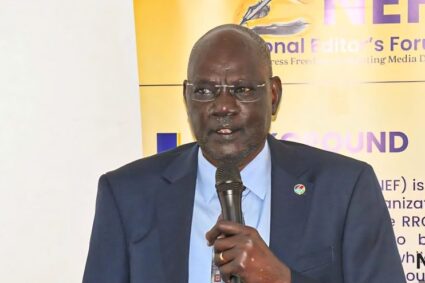
The Deputy Governor of Central Equatoria State, Paulino Lokudu Obede, said the JEDCO project did not capture the interest of the citizens as it kicked off with high tariffs.
He regretted the State government’s cooperation with the national government in issuing land free of charge to the JEDCO.
Lokudu made the remarks during the launch of the South Sudan Energy Sector Access and Institutional Strengthening project in Juba yesterday.
“In the Republic of South Sudan, access to electricity is only 1% of the 100% of the population. Meaning 99% of the population has no access to electricity,” he said.
“On behalf of the state government and the people in the states, let there be access to electricity for the 99% of the population.”
Lokudu noted that the majority of the population who live in the city though have access to electricity in their offices whether private or government institutions, are not using this electricity.
“We have over 5,000 street lights in Juba and over 4,000 of them are not working, while we pay for these street lights and on the same scenario, launching of the electricity poles has not taken a proper consultation with the government of the state.”
The deputy governor also lamented of the $3 being collected by JEDCO from everyone buying electricity in the name of the street lights.
“Again, JEDCO is asking the Central Equatoria State government to pay for electricity. The street lights are the responsibility of the corporate service of the institutions that are supplying power to ensure that the street lights are free of charge, not to be paid for by the people or the government,” Lokudu stressed.
On a separate note, he raised concerns about the state government not being given the master plan for the city.
“That’s why today, you have poles that fall sometimes inside somebody’s plot. It is the state government that is supposed to give the master plan because they know where the electricity poles are supposed to be fixed, where the fiber optics are supposed to be fixed, where the clean water connection pipelines are supposed to be run.”
However, he called on the citizens to cooperate as the expansion of electricity will require a solid responsibility and cooperation between people and the government.
Lokudu noted difficulties in service delivery, especially in the areas that are not well demarcated, citing land grabbing as one of the obstacles.