

Oyet highlights struggles and progress in South Sudan media

According to Oyet, the period between 2005 and 2011 saw journalists struggle to report freely, as criticism of major parties in the country was often seen as unpatriotic
By Aguok Chok
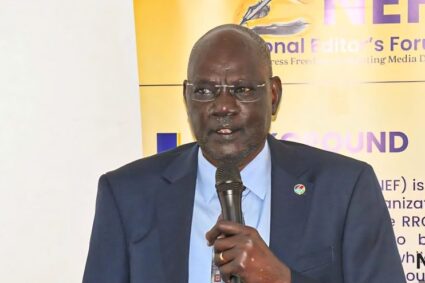
Chairperson of the South Sudan Union of Journalists, Patrick Oyet, in a speech delivered at a workshop organized by the UNMISS, reflected on the historical challenges faced by journalists in South Sudan.
According to Oyet, the period between 2005 and 2011 saw journalists struggle to report freely, as criticism of major parties in the country was often seen as unpatriotic or contrary to the country’s aspirations for independence. Recalling his own experiences, Oyet shared personal anecdotes of being arrested by security forces and facing obstacles in gathering information, particularly due to the lack of official spokespersons in security institutions.
He acknowledged the significant improvements in media-security relations since those early years, citing the establishment of official spokespeople within key security institutions, including the police and national security. The development has made it easier for journalists to access critical information, improving their ability to report effectively.
Oyet also highlighted the role of the Media Authority in resolving conflicts between journalists and security forces. The authority has played a key role in preventing disputes from escalating to court, fostering a more collaborative environment between the media and security institutions.
While challenges remain, particularly with the rise of social media, Oyet emphasized the overall improvements in professionalism and access to information within South Sudan’s media sector. He also acknowledged the support of international organizations, in advancing media development in the country.
Reflecting on the journey of South Sudan’s media landscape, Oyet’s address underscored the progress made since the country’s independence, illustrating both the struggles and the steps forward in achieving greater media freedoms and more open relations with security institutions.