




By Yaba Odongo Odoyo
The Bank of South Sudan (BoSS) has faced several challenges, including under-capitalization of domestic banks, limited access to banking services in rural areas, and a high ratio of non-performing loans. Additionally, the banking sector was impacted by external shocks like the COVID-19 pandemic, the Russia-Ukraine war, and the conflict in Sudan.
The banking regulator has been impacted by the struggling nature of domestic banks to meet the minimum reserve requirement of 20 percent as highlighted by the BoSS in 2022. Meanwhile, there is limited access to banking services as banks are not widely available in rural areas, hindering financial inclusion and economic growth. On non-performing loans (NPLs), the ratio of NPLs to total loans increasing, indicating a rise in delinquent loans. external shocks.
The BoSS noted that the banking sector had been affected by various external factors. Lending interest rates remain high, reflecting a lack of development and competition in the banking sector. On the other hand, South Sudan’s economy has seen contractions in recent years, impacting the banking sector. The country’s economy is heavily reliant on oil, and the banking sector is affected by fluctuations in oil prices and production. The South Sudanese Pound has been depreciating, further impacting the banking sector and economic stability. The reliance on overdraft facilities with the BoSS, due to shrinking revenues, has added to the challenges with conflict and Instability further weakening the country’s economy and banking sector although central bank introduced monetary changes to rescue the situation.
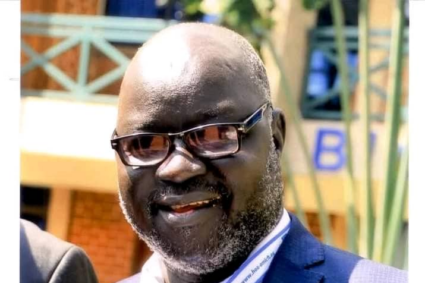
These are some of the challenges the new bank governor, Dr. Addis Ababa Othow recently appointed by President Salva Kiir must address for the good and well-being of the nation. Who is Dr. Othow now in the helm of the country’s top financial institution? Indeed it is believed that Dr.Addis Ababa Othow Akongdit (PhD) born in 1974, Malakal, though not new in the banking sector would make a different by tackling the shortfalls, but he will need support from all key players to succeed. I have met him not once and going by what his ideologies and commitments are, there are great chances and possibilities that he can deliver. His professional approach in the sector which has seen him climb to the top position speaks for itself. He attended undergraduate studies at Al-Neelain University, Khartoum where he graduated in 1995 with a Bachelor’s degree “Excellent with Second Class Honour” in Economics Studies. His exceptional academic performance earned him the Faculty Board’s prize for the best student in the Department of Economics for the academic year 1994/1995.
In 1996, he joined Al-Neelain University as a Teaching Assistant before transitioning to a role as a Banking Inspector at the Central Bank of Sudan, Khartoum, in 1997. During his tenure at the Central Bank, he contributed to the financial and accounting restructuring of Ivory Bank in 1998. In 1999, he was seconded to the Council of Southern Sudan as an Advisor and Planner for Development Projects, focusing on initiatives to improve the well-being of families in Southern Sudan. That same year, he earned a Master’s degree in Economic Development from Al-Neelain University.
Relentless in his pursuit of knowledge, Dr. Othow moved to the Netherlands, where he obtained a Bachelor’s degree in Finance and Accounting from Hanze University, Groningen, in 2007. Shortly after graduating, he began working as an Assistant Accountant/Auditor at Dubois and Co Chartered Accountants in Amsterdam, where he served until 2010. He then decided to return to his homeland.
In 2010, Dr. Othow joined the Anti-Corruption Commission as a consultant. However, his tenure was short-lived as he re-entered the finance and banking sector later that year, joining the Bank of South Sudan (BoSS) in December 2010. He initially served as the Head of the Non-Banking Division until January 2013, when he was promoted to Head of the Planning, Regulation, and Licensing Division. During this time, he was also a member of the Steering Committee for the Private Sector Development Program, where he managed files for the World Bank and the International Finance Corporation (IFC).
Dr. Othow currently serves as an Adjunct Associate Professor at the College of Social and Economic Studies, University of Juba. In addition to his academic role, he holds several key leadership positions in national institutions. He is the Chairperson of the Board of Directors at the South Sudan Civil Aviation Authority (SSCAA), the Chairperson of the Board of Governors (BoG) at the Rombur National Teachers Training Institute (NTTI), and the Chairperson of the National Committee for the Financial Intelligence Unit (FIU) of South Sudan. Previously, Dr. Othow served as the Deputy Chairperson of the Board of Trustees for the South Sudan Pensions Fund (SSPF), contributing to the governance and oversight of the country’s pension system.
In May 2013, Dr. Othow completed his first doctoral thesis, titled “Impact of Political Stability on Economic Development: Case of South Sudan”, earning a PhD in Political Economy from Al-Neelain University, Khartoum, Sudan. His research, which explores the intersection of governance and economic progress, has been published as a book. In December 2018, he achieved a second doctoral milestone by completing a thesis titled “The Role of Institutions in Achieving Financial Stability and Sustainable Economic Development in South Sudan”. This work earned him a PhD in Business Administration from the Faculty of Business and Economics at Atlantic International University, USA. This research published is also available.
To further enhance his leadership and managerial capabilities, Dr. Othow completed the Advance Management Programme (AMP) in December 2019 at Strathmore University. This joint programme, conducted in collaboration with Lagos Business School (LBS) and IESE Business School, Barcelona, Spain, is designed to equip business leaders with the professional and personal skills needed to effectively navigate complex organizational challenges and drive business success.
Dr. Othow began his tenure with Equity Bank in February 2015, joining the Nairobi headquarters as General Manager of Operations. Shortly thereafter, he was deployed to South Sudan to serve as Director of Operations and Deputy Managing Director at Equity Bank South Sudan (EBSSL). In 2018, he was promoted to Managing Director, a position he held until August 25, 2022, when he was appointed 1st Deputy Governor of the Bank of South Sudan (BoSS).
He served at the Central Bank until October 2, 2023, after which he returned to Equity Bank South Sudan on November 20, 2023, resuming his role as Managing Director. On February 21, 2025, Dr. Othow was once again reappointed as 1st Deputy Governor of the Central Bank of South Sudan, with responsibility for Policy and Banking.
He has attended numerous professional programs, executive trainings, and seminars worldwide, including at Harvard Business School, Lagos Business School, the International Labour Organization (ILO) and MIT Sloan School of Management. These engagements have deepened his expertise in leadership, strategy development, governance, ethics, organizational transformation, and future readiness. His solid knowledge base in economics, finance, and leadership, coupled with his unwavering motivation to embrace new challenges, continues to drive his career.
Yaba (Jaduong) Odongo Odoyo is a leading commentator, writer and established Editor with long standing career in journalism and media industry internationally. The comments and insight shared are his own. You can contact him at +211921351878, +254795226883 or e-mail: odoyo2002@gmail.com.