



South Sudan and China deepen technical cooperation in oil sector

Chinese oil company CNPC reaffirmed its dedication to South Sudan’s petroleum sector and expressed readiness to deploy both resources and modern technology in alignment with the country’s development goals.
By Aguok Chok
China has long played a pivotal role in South Sudan’s oil industry, dating back to the country’s pre-independence era when Chinese companies first invested in Sudan’s petroleum sector. After South Sudan gained independence in 2011, China swiftly recognized the new nation and continued its strategic partnership, particularly in the energy sector. The China National Petroleum Corporation (CNPC) became one of the major stakeholders in oil exploration and production in South Sudan, a collaboration that has endured through political instability and economic fluctuations.
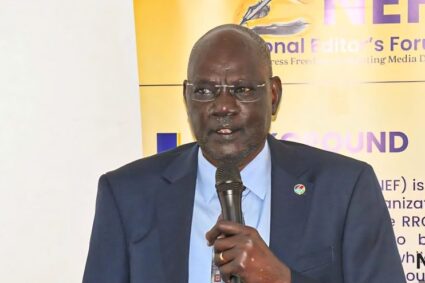
Building on this longstanding relationship, South Sudan and China have reaffirmed their mutual commitment to strengthening technical cooperation in the oil sector. This was underscored during a high-level meeting between the Ministry of Petroleum, led by Undersecretary Deng Lual Wol, and representatives of CNPC.
“We will convene a meeting with representatives of the China National Petroleum Corporation to deepen bilateral cooperation in the oil sector,” said Undersecretary Wol. “This marks a critical step in advancing technical collaboration to increase oil production in South Sudan.”
The discussions placed particular emphasis on revitalizing key oil fields in Unity State (Blocks 1, 2, and 4), the Ruweng Administrative Area, and Upper Nile State (Blocks 3 and 7). These regions represent vital components of the country’s oil infrastructure, and the government is keen to optimize their output through strategic partnerships.
Undersecretary Wol noted that the meeting focused on practical measures to boost production, enhance operational efficiency, and address long-standing challenges. “We are committed to advancing technical cooperation that supports increased oil production across key sites,” he emphasized.
In a show of continued support, CNPC reaffirmed its dedication to South Sudan’s petroleum sector and expressed readiness to deploy both resources and modern technology in alignment with the country’s development goals. “The CNPC team reaffirmed its strong commitment to South Sudan and expressed their willingness to mobilize resources and technology to support our oil production efforts,” Wol added.
A major outcome of the meeting was the agreement to establish a joint technical committee. This body will be tasked with identifying and resolving operational and logistical challenges that have impeded production. Key areas of focus will include field rehabilitation, capacity building for local personnel, and the integration of environmentally sustainable practices.
“Both sides engaged in constructive discussions aimed at identifying viable strategies to boost production, improve operational efficiency, and prioritize training for our national workforce,” Undersecretary Wol stated. “Special attention was also given to ensuring that our practices are environmentally responsible.”
The South Sudanese government reiterated its commitment to leveraging the country’s natural resources as a catalyst for national development and economic stability. “The government remains committed to ensuring that our natural resources contribute meaningfully to national growth,” said Wol.
In conclusion, the meeting marks a renewed chapter in China–South Sudan energy cooperation, anchored in shared interests, technical progress, and sustainable development. The outcome signals a proactive approach by the Ministry of Petroleum to revitalize the country’s oil sector through robust international partnerships that align with South Sudan’s national priorities.
“The government remains committed to ensuring that our natural resources contribute meaningfully to national growth,” said Deng Lual Wol, Undersecretary in the Ministry of Petroleum.