



Anyuak monarch’s homecoming rekindles hope, unity among the community

By Emmanuel Mandella
Joy and cultural pride filled the air at Juba International Airport as the Anyuak Community warmly welcomed back their King, His Majesty Akwai Agada Akwai, who had spent several months in the United States receiving medical treatment.
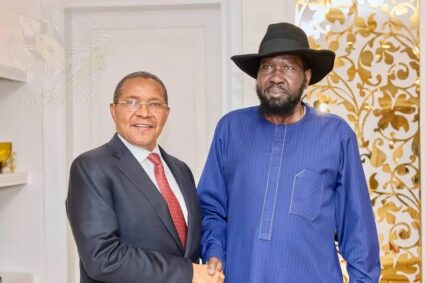
A host of people, including community members, traditional dancers, and senior government officials gathered to receive the monarch, whose return was marked by a moment of celebration and reflection for one of South Sudan’s historic kingdoms.
King Akwai was greeted with thunderous ululations, rhythmic drumming, and vibrant cultural dances. His presence sparked emotion and national dialogue on the role of traditional institutions in modern governance.
“We are happy our King has returned in good health. His presence means peace, guidance, and continuity for our people. This is not just an Anyuak celebration, it is a South Sudanese moment” said a community elder present at the airport.
In his brief address, King Akwai thanked the community for their unwavering support during his time abroad and urged all South Sudanese to embrace unity and peaceful coexistence.
“Our country has 64 diverse tribes. Let us stand together under one government, one destiny. Only through unity can we achieve lasting peace,” the King declared.
King Akwai’s presence is a reminder of the significance of traditional monarchies in South Sudan’s socio-political fabric. Today, the country is home to three recognized kingdoms, including the Anyuak Kingdom, the Azande Kingdom, and the Shilluk Kingdom; each with a unique cultural heritage and historical role in maintaining peace and communal identity.
The Anyuak Kingdom, primarily based in Pochala, serves as a vital cultural compass for the Anyuak people.
The Azande Kingdom, headquartered in Yambio, has emerged as a strong cultural institution in Western Equatoria State, recently leading youth engagement programs and advocating for education, food security and promoting equal cultural participation in local languages.
The Shilluk Kingdom, on the other hand, based in Upper Nile’s Kodok area, continues to be a symbol of resilience and reconciliation in the region.
These kingdoms, though not formal political entities, have increasingly stepped into peacemaking roles, acting as neutral mediators in local disputes, mobilizing communities for dialogue, and reinforcing a sense of belonging.
In South Sudan’s journey towards stability and structured governance institutions, traditional leaders will still hold the trust and moral authority and act as the glue to societal reforms.
“Traditional leaders like King Akwai are vital bridges between government structures and local communities, their influence can foster reconciliation where political rhetoric fails,” said an observer.
The return of King Akwai not only renews hope for the Anyuak people but also reaffirms the enduring role of kingship as a unifying force in South Sudan’s fragile peace building journey.